


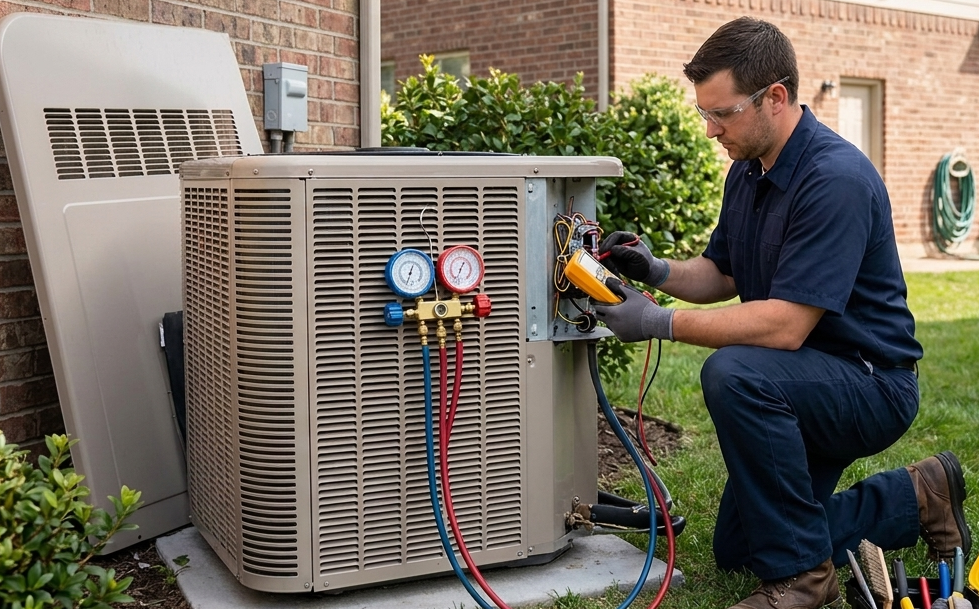
Thermodynamics does not take seasons off. When sub-zero temperatures release their grip on your neighborhood, your residential cooling network wakes up from a long, cold hibernation. Months of snow accumulation, ice formation, and dormant inactivity leave mechanical systems vulnerable to severe operational shock. Flipping your thermostat to cooling mode on the first hot afternoon without inspecting your hardware is a high-risk gamble. Internal capacitors degrade, outdoor condenser fins trap winter debris, and sealed refrigerant circuits develop pressure drops under thermal stress. Applying proven AC maintenance tips in Dayton before spring turns into blistering summer heat protects your mechanical investment and maintains total climate control across your floor plan. We treat residential cooling as a precision science. Here is the technical checklist required to recalibrate your system and secure maximum seasonal performance.
1. Outdoor Condenser Unit Debris Removal and Clearance
Your outdoor condensing unit spent the entire winter fighting severe weather elements. Dead leaves, fallen twigs, salt residue, and dense mud pack against the delicate aluminum fins, creating a physical thermal barrier. This debris blocks ambient air intake, forcing your compressor to work at elevated head pressures to dump indoor heat. Before powering up the system, inspect the perimeter surrounding the outdoor cabinet. Clear away heavy vegetation, leaf buildup, and organic matter to establish a strict two-foot clearance zone on all sides. Straighten bent condenser fins using a specialized fin comb to optimize airflow velocity. Running a condensing unit choked by winter debris spikes electrical amperage draw and overheats internal motor windings, accelerating mechanical wear before peak summer even begins.
2. Electrical Diagnostics and Capacitor Calibration
High-voltage electrical networks demand absolute diagnostic precision after months of cold inactivity. Winter freeze-thaw cycles expand and contract electrical terminals, loosening copper wiring connections inside your outdoor disconnect box. Rodents frequently nest inside control cabinets during winter, chewing through insulation and damaging contactor wiring. Inspecting these critical components requires testing electrical continuity and checking microfarad ratings on dual-run capacitors. Recognizing distinct AC repair signs (such as loud humming sounds during compressor startup, pitted contactor points, or bulging capacitor tops) allows us to replace compromised parts before they trigger total system lockouts. A failing capacitor forces your compressor to draw extreme starting current, which trips circuit breakers and burns out motor insulation.
3. Refrigerant Line Pressure Testing and Thermal Transfer Matrix
Refrigerant operates inside a closed, pressurized loop. Thermal contraction during extreme winter freezes can stress brazed copper joints, creating microscopic fractures that allow refrigerant vapor to bleed into the atmosphere. Running a cooling system with a low refrigerant charge starves the compressor of vital lubrication and internal cooling, causing extreme friction that destroys scroll bearings. The diagnostic matrix below contrasts normal operational parameters against post-winter system defects:
| Performance Variable | Factory Operational Baseline | Post-Winter Defect State | Mechanical Consequence |
| Evaporator Coil Airflow | 350 – 400 CFM per ton | Restricted by clogged filter | Ice formation, liquid slugging |
| Refrigerant Charge | Specific subcooling target | Low pressure from winter leaks | Overheated compressor windings |
| Condensate Line Flow | Immediate gravity drainage | Blocked by stagnant debris | Water backing up into furnace |
| Electrical Amperage | Within nameplate rating | Spiking due to dirty coils | Tripped breakers, short-cycling |
Isolating these pressure differentials confirms if your system retains its factory thermal transfer capacity.
4. Ventilation Static Pressure and Filter Replacement
Airflow is the primary vehicle for indoor thermal management. During winter heating months, your furnace blower pushed heavy volumes of warm air through your ductwork, collecting massive amounts of dust, pet dander, and airborne particulates inside your air filter. Starting your cooling season with a dirty, saturated filter creates immense static pressure resistance across the indoor evaporator coil. Without sufficient warm air passing over the cold copper fins, refrigerant temperatures drop below freezing, turning ambient condensation into a solid block of ice. If you are investigating why your AC isn’t working on a warm afternoon, a frozen evaporator coil caused by restricted airflow is frequently the central mechanical cause. Swapping out dirty media filters restores proper cubic feet per minute airflow across your system.
5. Condensate Line Flushing and Biological Prevention
Humidity removal is half the battle in residential cooling. As your evaporator coil extracts ambient moisture from indoor air, condensation drips into a collection pan and drains through a dedicated PVC line. During winter months, standing moisture inside this drain line stagnation zone collects dust and bacterial spores, forming thick algae plugs. When summer cooling activates, high-volume condensation fills the pan, hits the blockage, and overflows directly onto your furnace electronics or basement floor. Flushing your condensate line with a pressurized flush or clearing it with a wet-dry vacuum removes dormant biological growth. Installing a floating safety switch automatically shuts down system operation if the drain pan fills, protecting your property against severe interior water damage.
Executing a systematic post-winter evaluation converts reactive panic into total mechanical control. Your residential air conditioning system is a complex network of electrical circuits, pressurized fluid loops, and calibrated airflow channels that require technical alignment after cold-weather inactivity. Clearing outdoor debris, testing electrical capacitors, verifying refrigerant pressures, and clearing condensate lines restore baseline factory efficiency while stopping unexpected summer breakdowns. We bring certified technical discipline to every climate control grid, protecting your building assets and keeping your living space perfectly chilled. Take charge of your home comfort today and secure long-term operational stability for the entire warm season ahead.
“Ready to prepare your home for summer? Call Eco Plumbers, Electricians, and HVAC Technicians at 937-699-5741 today to book your certified system evaluation and secure total.”
FAQs
1. When is the best time to schedule spring cooling inspections in Dayton, OH?
Homeowners in Dayton, OH, should schedule spring cooling inspections in early to mid-spring before outdoor temperatures rise significantly, verifying that electrical components and fluid lines operate safely before peak heat hits the region.
2. Why does an outdoor cooling unit make strange noises after winter in Dayton, Ohio?
An outdoor unit in Dayton, Ohio may emit harsh grinding or rattling sounds after winter due to loose fan motor bolts caused by freezing temperatures, trapped yard debris inside the cabinet, or a failing electrical capacitor struggling to start the compressor.
3. How does spring humidity in Dayton, OH affect indoor cooling performance?
High seasonal humidity levels in Dayton, OH force cooling systems to work harder to extract moisture from indoor air, making clean evaporator coils and clear drain lines essential for preventing indoor air stagnation and ice formation on coils.