

What's Ahead
Choosing a new water heater can get confusing quickly. You may be trying to lower rising energy bills, stop running out of hot water, or replace a bulky tank that takes up valuable space. But hybrid, electric tankless, and gas tankless water heaters have very different installation requirements—and the least expensive unit on paper can become the most expensive option once electrical, gas-line, venting, or drainage upgrades are included.
At Eco Plumbers, Electricians, and HVAC Technicians, our licensed plumbing team has completed thousands of water-heater replacements across Ohio. We regularly help homeowners evaluate more than the equipment price, including household hot-water demand, available space, electrical capacity, gas service, venting requirements, and long-term operating costs.
In this article, you’ll learn how hybrid, electric tankless, and gas tankless water heaters compare in efficiency, installation cost, hot-water performance, space requirements, and ideal applications. By the end, you’ll have a clearer understanding of which option is best for your home, budget, and daily hot-water needs.
What Is a Hybrid Water Heater?
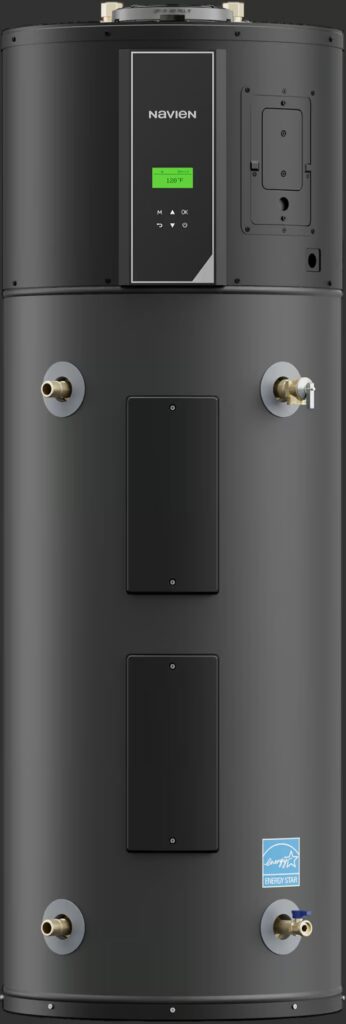
In this comparison, a hybrid water heater, also called a heat-pump water heater, is a storage-tank system that uses electricity to move heat rather than generate all of it directly. It pulls warmth from the surrounding air and transfers that heat into the water. When your household uses more hot water than the heat pump can produce on its own, built-in electric resistance elements provide additional heating.
Because a hybrid model stores hot water, it does not provide an unlimited supply. Most residential units come in 50-, 65-, and 80-gallon capacities, so choosing the right size depends on how much hot water your household uses during its busiest periods. You will also need enough room for the tank, adequate airflow around the unit, and a drain for the condensation the system produces.
How Do Hybrid, Electric Tankless, and Gas Tankless Compare?
Each option differs in how it delivers hot water, how much space it requires, and what your home may need to support it. This side-by-side comparison can help you identify which system best matches your household’s priorities.
Factor | Hybrid Heat Pump Water Heater | Electric Tankless Water Heater | Gas Tankless Water Heater |
Best Fit | Most households focused on lowering energy use | Small homes, low-demand households, or point-of-use applications | High-demand households with existing gas service |
Hot-Water Delivery | Store a limited supply in a tank | Provides continuous hot water within its rated flow limit | Provides continuous hot water within its rated flow limit |
Space Required | Requires room for a full-size storage tank | Compact and wall-mounted | Compact and wall-mounted |
Common Installation Needs | Dedicated circuit, adequate airflow, and condensate drain | Significant electrical capacity and possibly a panel or service upgrade | Adequate gas supply, proper venting, and possibly a condensate drain |
Primary Drawback | Can run out of hot water if the tank is undersized | May struggle to support multiple fixtures, especially in colder climates | Installation and ongoing maintenance can be more complex |
Primary Advantage | Typically offers the lowest energy use for a whole-home system | Saves space and avoids storing hot water | Delivers strong, continuous output for households with high demand |
The best water heater is the one that meets your household’s peak hot-water demand without requiring costly upgrades to your electrical panel, gas line, venting, drainage, or available space.
Which Water Heater Has the Lowest Operating Cost?
For many households, replacing a standard electric tank with a hybrid heat-pump water heater will cost the least to operate. It transfers heat from the surrounding air instead of generating all its heat through electric resistance. ENERGY STAR estimates that a certified model can save a four-person household about $550 per year, although actual savings vary.
Electric and gas tankless systems reduce standby energy loss by heating water only when needed. However, electric models use high-powered resistance heat, while gas models still have fuel and maintenance costs.
Compare local utility rates, household demand, maintenance expenses, and each model’s estimated annual energy cost before deciding.
Which Water Heater Costs Less to Install?
Compare the total installed cost, not just the equipment price. A less expensive unit can cost more once you include electrical, gas-line, venting, drainage, or space upgrades.
A hybrid water heater may require a dedicated 240-volt circuit, adequate airflow, condensate drainage, and enough room for a storage tank. Installation is often simpler when it replaces an existing electric tank in a suitable location. The total cost could range from $5,500-$6,500+ depending on the size.
An electric tankless water heater saves space, but a whole-home model may require multiple breakers, heavy-gauge wiring, and an electrical panel or service upgrade. These improvements can quickly offset any savings on the equipment itself. The total cost is around $3,000+ for one of these units.
A gas tankless water heater may require a larger gas line, sealed venting, combustion air, condensate drainage, and water treatment in areas with hard water. It is usually more practical when your home already has compatible gas and venting infrastructure. The total cost could range from $6,000-$8,000+ for one of these units.
The most affordable option is often the system your home can support with the fewest major upgrades.
Which Option Provides the Most Hot Water?
Gas tankless water heaters generally provide the strongest continuous hot-water output for busy households. However, “endless hot water” does not mean unlimited capacity. Every tankless unit has a maximum flow rate, measured in gallons per minute. Running several showers, faucets, or appliances at once can reduce the water temperature or flow.
Electric tankless performance depends heavily on the temperature of the incoming water. According to this U.S. Department of Energy water-heating fact sheet, a 70-degree temperature rise is possible at a flow rate of about five gallons per minute for gas tankless water heaters and two gallons per minute for electric models. This difference is especially important in colder climates and homes that use multiple fixtures at the same time.
A hybrid water heater draws hot water from its storage tank, so performance depends on the tank size and first-hour rating. A properly sized unit can meet a family’s daily needs, but an undersized tank may rely more often on its less-efficient backup heating elements or run out during periods of high demand.
Your best option depends on how much hot water your household uses at once, not just how much it uses throughout the day.
Which Type of Water Heater Is Best for Your Home?
The best option depends on your hot-water demand, available space, utility connections, and the upgrades your home may require.
Choose a Hybrid Water Heater for Energy Efficiency
A hybrid water heater is often a good fit if you want lower energy use and have enough room for a storage tank, adequate airflow, and condensate drainage. It can be especially practical when replacing a conventional electric tank.
It may not be ideal in a sealed closet, near noise-sensitive living areas, or in a home with frequent spikes in hot-water demand.
Choose an Electric Tankless Water Heater for Smaller Applications
Electric tankless works best for a small home, a low-demand household, a remote sink, or a point-of-use application. It saves floor space and does not require gas service. For whole-home use, have an electrician confirm that your panel, wiring, breakers, and electrical service can support the unit.
At Eco, we do not recommend or install electric tankless water heaters because they are typically not a practical fit for Ohio’s climate. During the winter, the water entering your home can be extremely cold, and many electric tankless systems cannot raise that water to a comfortable temperature while maintaining adequate flow. This can lead to inconsistent hot water or reduced water pressure when you need it most.
Electric tankless units are more common in warmer climates, such as Florida, where incoming water temperatures may be around 80 degrees and require far less heating. In Ohio, the equipment cost, required electrical upgrades, and limited cold-weather performance usually outweigh the potential efficiency benefits.
Choose a Gas Tankless Water Heater for High Demand
Gas tankless is often the best choice when you need continuous hot water for multiple fixtures and already have adequate gas service and venting.
It may be less practical if installation requires major gas-line or venting upgrades, or if you prefer an all-electric home with less combustion-system maintenance.
So, Which Water Heater Should You Choose?
The right water heater is the one that meets your peak hot-water demand without requiring costly or unnecessary upgrades. For many Ohio homeowners, a hybrid water heater offers the best balance of efficiency and reliable performance. Gas tankless may be better for households with high demand and existing gas infrastructure. At Eco, we generally do not recommend electric tankless systems because their potential efficiency benefits in Ohio rarely justify the equipment cost and electrical upgrades.
If high energy bills, limited hot water, or uncertainty about replacement options brought you here, you now know to compare more than the equipment price. Your home’s available space, utility connections, installation requirements, and hot-water usage all affect which system will provide the best long-term value.
Before choosing a replacement, read 7 Common Problems with Tank Water Heaters No One Talks About. You will learn how to recognize hidden issues such as sediment buildup, internal corrosion, pressure problems, and declining efficiency, helping you determine whether your current system needs maintenance, repair, or replacement.
At Eco Plumbers, Electricians, and HVAC Technicians, we help Ohio homeowners evaluate their current water heaters and choose replacements based on their homes, budgets, and daily needs, without pressure or guesswork.
FAQs
Will a tankless water heater provide hot water instantly?
No. Tankless systems heat water on demand, but the hot water still must travel through your pipes just like any other water heater. The distance between the water heater and the fixture determines how long you wait. A recirculation system may help reduce that delay.
Will these water heaters work during a power outage?
Hybrid and electric tankless water heaters will not operate without electricity. Most gas tankless models also need electricity for ignition, controls, and safety components, even though they use gas to heat the water. Backup power may keep some gas models running.
Does a hybrid water heater cool the room where it is installed?
Yes, slightly. A hybrid water heater pulls heat from the surrounding air and can also remove some moisture. This may benefit a warm basement or utility room, but it can make a small or conditioned space feel cooler.