

What's Ahead
If your primary sump pump fails during a heavy storm or power outage, your backup pump could be the only thing preventing a flooded basement. Choosing between a standard backup sump pump and a high-efficiency model is not just about price. It is about making sure your home has the right level of protection when you need it most.
At Eco Plumbers, Electricians, and HVAC Technicians, we help Ohio homeowners evaluate sump pump systems based on their home’s water volume, power outage risk, plumbing setup, and budget. While battery backup pumps can provide better performance and longer operating times, they are not always what homeowners choose when it’s time to replace their sump pump.
If Your Primary Sump Pump Fails, Your Backup Pump Becomes Your Lifeline
A sump pump provides the most value when your home is at the greatest risk of flooding. That is often during a severe storm, power outage, or unexpected equipment failure.
If your primary sump pump stops working, the backup system may be the only thing preventing water from overflowing into your basement and causing thousands of dollars in damage. It also protects your home against hydrostatic pressure, which causes damage to the foundation of your home over time.
Choosing the right backup sump pump is about making sure that pump can handle your home’s water volume and keep operating when you need it most.
What Is a Battery Backup Sump Pump?
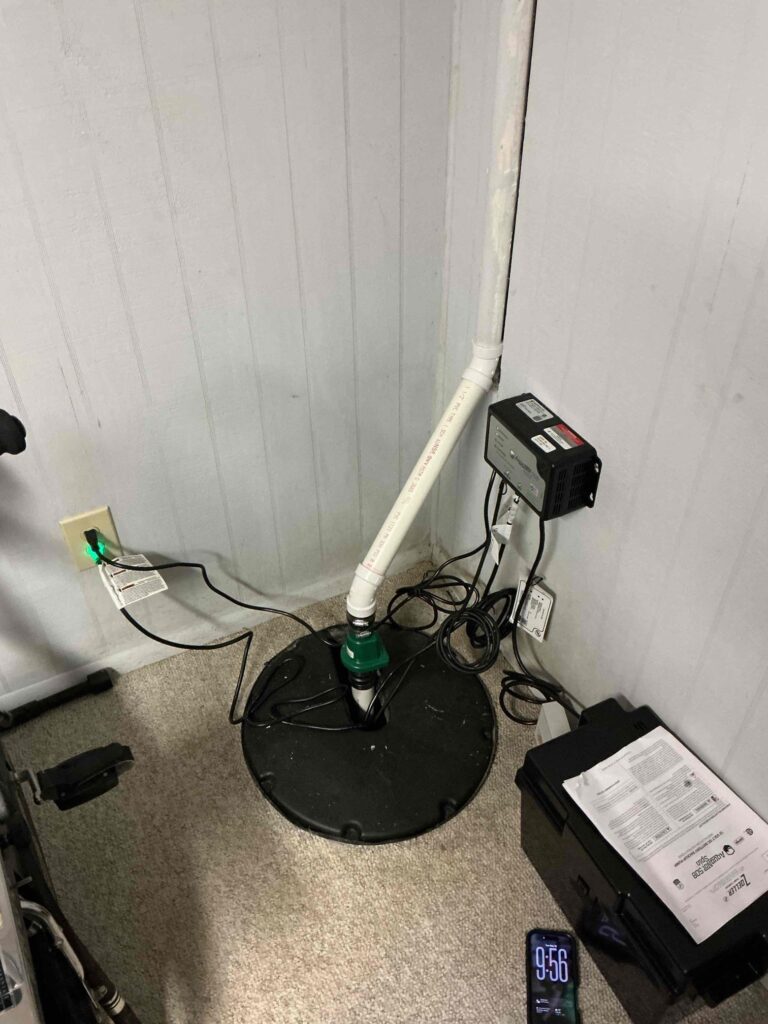
A battery backup sump pump is a secondary pump designed to remove water from your sump pit when your primary sump pump cannot operate.
Most commonly, the backup pump turns on when:
- The power goes out
- The primary sump pump fails
- The primary pump cannot keep up with heavy water flow
- A mechanical problem prevents the main pump from operating
Unlike your primary sump pump, a battery backup system runs on a separate battery rather than your home’s electrical power. This allows it to continue pumping water during storms and power outages, when the risk of basement flooding may be highest.
Depending on the model and manufacturer, a battery backup sump pump system may include:
- A high-capacity battery
- A separate backup pump
- Automatic activation controls
- A battery charger
- Audible or Wi-Fi-connected alarms
- Battery monitoring features
- A control panel that displays the system’s operating status
The primary goal of a battery backup sump pump is to provide temporary flood protection when your main sump pump is unavailable or overwhelmed.
The amount of protection you receive depends on the pump’s capacity, the condition and size of the battery, and how frequently water enters the sump pit. During an extended outage or period of heavy water flow, a properly maintained backup system can help reduce the risk of basement flooding until power is restored or the primary pump is repaired.
What Is a Standard Sump Pump?
A standard sump pump helps protect your basement or crawl space by removing water that collects in the sump pit.
Most standard sump pumps are designed to handle:
- Normal groundwater entering the sump pit
- Water from routine rainstorms
- Seasonal increases in groundwater
- Occasional periods of heavier water flow
Compared with higher-capacity or more advanced models, standard sump pumps typically:
- Move fewer gallons of water per hour
- Include fewer monitoring or control features
- Use a simpler operating system
- Offer fewer smart alerts or remote monitoring options
- Cost less to purchase and install
For homes with a lower flood risk or a sump pump that runs infrequently, a standard sump pump may provide enough protection. The key is making sure the pump’s capacity matches the amount of water your sump system typically needs to manage.
High-Efficiency vs. Standard Backup Pumps
Feature | High-Efficiency Backup Pump | Standard Backup Pump |
Pumping capacity | Often higher, depending on the model | Typically moderate |
Energy use | Designed to use power more efficiently | May use more power for the same output |
Battery runtime | Often longer with a properly sized battery | May be shorter under the same conditions |
Water removal speed | Often faster | Typically slower |
Initial cost | Usually higher, around $1,500-$5,500+ installed | Usually lower, around $400-$1,200+ installed |
Controls and monitoring | May include advanced alerts or battery management | Usually includes simpler controls |
Maintenance needs | Vary by model and installation | Vary by model and installation |
Expected lifespan | Depends on build quality, use, and maintenance but typically around 10-15 years | Depends on build quality, use, and maintenance but typically around 7-10 years |
Both types of backup sump pumps can help protect your basement when the primary pump fails. High-efficiency models are generally better suited for homes with frequent pump activity, higher water volume, or longer power outages. Standard models may be sufficient for homes with a lower flood risk and less demanding pumping needs.
Why High-Efficiency Backup Pumps Are Often Worth the Investment
A high-efficiency backup sump pump may cost more upfront, but the added capacity, improved power use, and stronger performance can provide valuable protection in homes with greater flood risk.
They Can Move More Water During Heavy Storms
One of the biggest advantages of a high-efficiency backup sump pump is its potential to move more water during periods of heavy inflow, when you need it the most.
When intense rainfall causes groundwater to rise quickly, your backup pump must be able to keep pace. A higher-capacity model can help:
- Keep up with rising groundwater
- Reduce the risk of the sump pit overflowing
- Better protect finished basements and stored belongings
- Manage water more effectively during prolonged storms
For homes in flood-prone areas or homes where the primary sump pump runs frequently, the added pumping capacity can provide an important layer of protection.
They Can Provide Longer Battery Runtime
Many backup sump pumps rely on battery power during an outage. A more energy-efficient pump may be able to move the required amount of water while drawing less power from the battery.
Depending on the pump, battery size, and amount of incoming water, this may provide:
- Longer operation during a power outage
- More pumping cycles before the battery is depleted
- Better protection during extended storms
- Less strain on the battery system
If your neighborhood experiences frequent or lengthy storm-related outages, battery efficiency may be one of the most important factors to consider.
They May Experience Less Strain During Operation
High-efficiency pumps are often designed with motors, impellers, and controls that help them move water without placing as much strain on the system.
Potential benefits may include:
- Less heat buildup
- Reduced motor strain
- Lower wear on internal components
- More consistent performance during long operating cycles
However, efficiency alone does not guarantee a longer lifespan. Installation quality, maintenance, water conditions, and how often the pump runs, downspouts, and the condition of the piping system and exterior drainage will also affect how long the system lasts.
They May Lower Long-Term Ownership Costs
Although high-efficiency backup pumps usually have a higher purchase price, they may cost less to own over time and protect you from damage claims.
Potential savings can come from:
- Lower electricity use during regular testing or operation
- More efficient battery use
- Fewer repairs if the system experiences less strain
- A longer service life when properly installed and maintained
These savings are not guaranteed, and they vary by model and usage. Still, for homeowners with frequent sump pump activity or a high risk of basement flooding, the added protection may justify the higher upfront cost.
Are There Any Downsides to High-Efficiency Backup Sump Pumps?
High-efficiency backup sump pumps can provide stronger performance and added convenience, but they also come with tradeoffs. Before upgrading, consider whether the extra cost and features are necessary for your home. A battery backup system gives you peace of mind in times of high stress.
Higher Initial Cost
High-efficiency backup systems typically cost more than standard models. The price may increase further when the system includes a larger battery, advanced controls, or professional installation.
For homeowners with a low flood risk or a primary sump pump that rarely runs, the added expense may not provide enough practical value to justify the upgrade. A more cost-effective option would be a water alarm to notify you if water has made its way to the basement floor.
More Complex Components
Some high-efficiency systems include features such as:
- Digital monitoring
- Smart alerts
- Wi-Fi connectivity
- Advanced battery charging and management
- Maintenance-free battery options
- Automatic testing or system diagnostics
These features can make it easier to monitor the system and identify problems early. However, they also add components that may require setup, maintenance, software updates, or occasional troubleshooting.
The right choice depends on how much protection and monitoring you need. A simpler standard system may be a better fit if you prefer fewer features and lower upfront costs.
When a Standard Backup Pump May Be Enough
A standard backup sump pump can be a practical and reliable choice when your home does not face a high risk of basement flooding.
It may be enough if:
- Your basement rarely has water problems
- Your primary sump pump runs only occasionally
- Your home has a relatively low flood risk
- You want basic protection in case the primary pump fails
- Keeping the upfront cost lower is a priority
Many homes do not need the higher pumping capacity or advanced features of a premium backup system. In those cases, a properly sized standard pump can still provide dependable emergency protection.
The most important factor is choosing a pump that matches your home’s water volume, outage risk, and basement conditions. The best option is not always the most expensive one. It is the one that can keep up when your primary system stops working.
How to Choose the Right Backup Sump Pump
Rather than focusing only on efficiency ratings or advanced features, consider how much flood protection your home actually needs.
Ask yourself:
- How often does your primary sump pump run?
- Has your basement flooded or come close to flooding before?
- Does your area experience frequent power outages during storms?
- How long do those outages typically last?
- Is your basement finished or used to store valuable belongings?
- How costly would water damage be to repair?
- How much water enters the sump pit during heavy rain?
Your answers can help you determine whether a standard or high-efficiency backup pump is the better fit.
If your primary pump runs infrequently and your basement has a low risk of flooding, a properly sized standard backup system may provide enough protection. If your sump pump runs often, your area experiences prolonged outages, or your basement contains finished living space or valuable belongings, a high-efficiency model may be the better long-term investment.
The goal is not to choose the pump with the most features. It is to choose a system with enough capacity and runtime to protect your home during the conditions you are most likely to face.
Should You Upgrade Your Existing Backup Pump?
It may be time to evaluate a newer backup sump pump if your current system:
- Is more than 7 to 10 years old
- Struggles to keep up during heavy rain
- Cycles more often than usual
- Relies on an aging or unreliable battery
- Makes unusual noises or shows visible signs of wear
- Fails a routine test or does not activate consistently
Age alone does not always mean a backup pump needs to be replaced, but older systems are more likely to have worn components, reduced battery performance, or outdated controls.
Newer high-efficiency models may offer improved pumping capacity, more effective battery management, automatic testing, and alerts that help you identify problems before an emergency. A professional inspection can help determine whether your current system still provides adequate protection or whether an upgrade would be a better long-term choice.
Is a High-Efficiency Backup Sump Pump Better?
Choosing between a high-efficiency backup sump pump and a standard model comes down to your home’s specific needs. While battery backup systems often provide greater pumping capacity and additional features, a standard backup pump can still provide dependable protection for homes with a lower risk of flooding. The best choice is the one that can keep your basement dry when your primary sump pump can’t.
If you’re trying to protect your home from costly water damage, it’s important to look beyond the purchase price and consider how often your sump pump runs, your risk of power outages, and how much damage a flooded basement could cause. Taking the time to evaluate these factors now can help you avoid expensive repairs later.
Your next step is understanding what you can expect to pay for a backup sump pump or a complete sump pump system. Our guide, How Much Does a Sump Pump Cost? (2026 Pricing Guide), breaks down equipment costs, installation pricing, and the factors that influence the total investment so you can budget with confidence.
At Eco Plumbers, Electricians, and HVAC Technicians, we believe homeowners make the best decisions when they have honest, transparent information. Whether you’re replacing an aging backup pump or installing one for the first time, we’re here to help you choose a system that provides the right level of protection for your home.
FAQs
Can a backup sump pump replace my primary sump pump?
No. A backup sump pump is designed to operate only when your primary sump pump fails, loses power, or cannot keep up with incoming water. It is not intended to serve as your home's primary drainage system. Both pumps work together to provide continuous protection during emergencies.
How often should I test my backup sump pump?
Most manufacturers recommend testing your backup sump pump at least every three to four months and before severe weather seasons, and check for debris in the pit. If your system uses a battery, you should also inspect the battery regularly and replace it according to the manufacturer's recommendations to ensure it will operate during a power outage.
Is a battery backup sump pump or a water-powered backup sump pump better?
Neither option is universally better. Battery backup sump pumps can be installed in most homes and continue working during power outages until the battery is depleted. Water-powered backup sump pumps do not rely on electricity or batteries, but they require adequate municipal water pressure and are not compatible with homes that use private wells. The best choice depends on your home's plumbing system, local water supply, and flood risk.