

What's Ahead
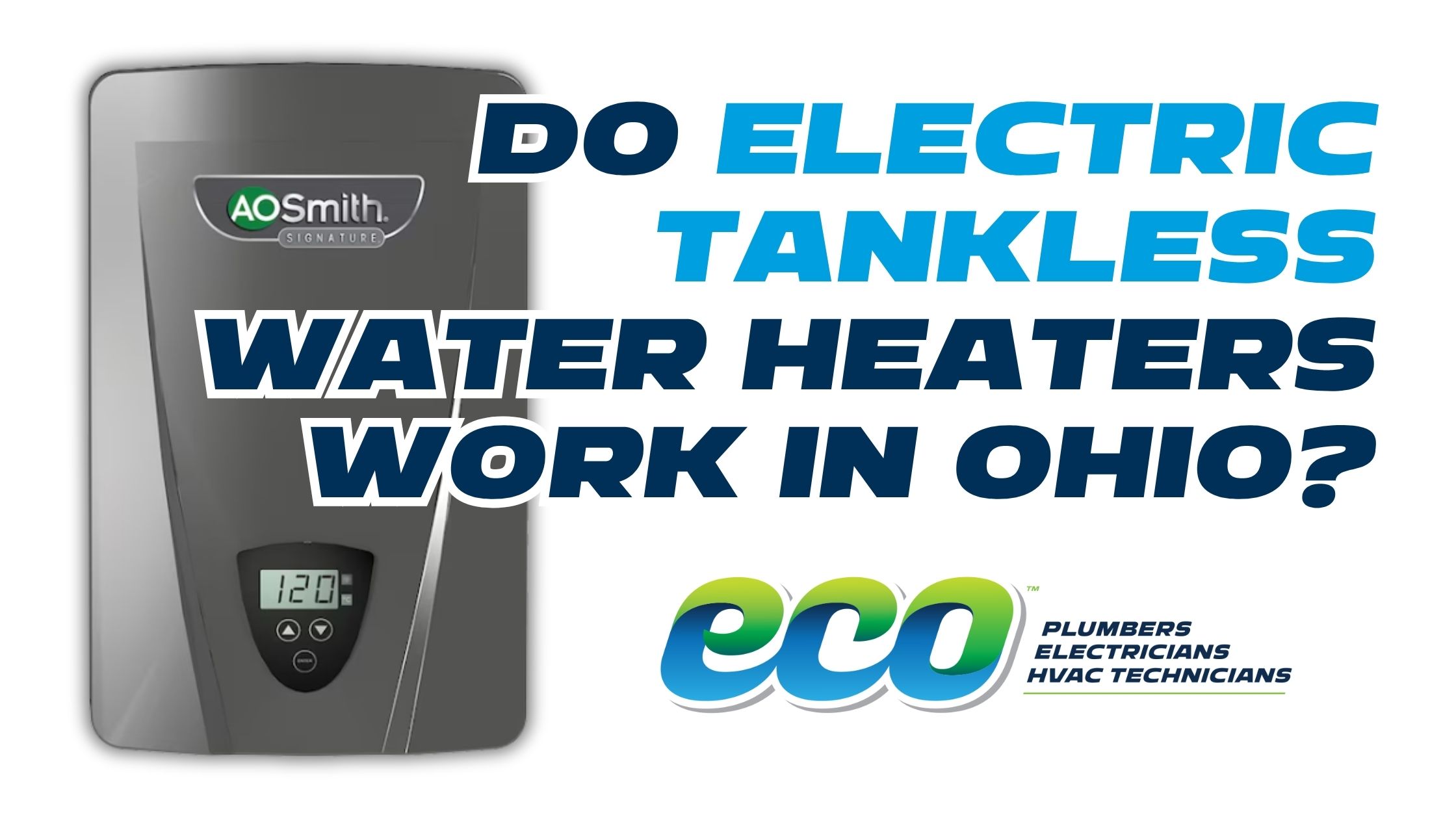
You don’t want to invest thousands of dollars in a new water heater only to discover it can’t keep up with your household during an Ohio winter. Electric tankless water heaters promise energy savings and endless hot water, but colder groundwater temperatures and high electrical demands can make their performance difficult to predict.
At Eco Plumbers, Electricians, and HVAC Technicians, we help Ohio homeowners choose water heating systems based on their home’s electrical and gas capacity, hot water demand, and long-term performance.
In this article, you’ll learn how electric tankless water heaters perform in Ohio, what electrical and performance limitations to expect, and which homes are the best fit for this technology. By the end, you’ll have the information you need to decide whether an electric tankless water heater or another option is right for your home.
How Do Electric Tankless Water Heaters Work?
Traditional water heaters store and continuously heat 40 to 80 gallons of water in a tank. Electric tankless water heaters work differently. They heat water only when you turn on a faucet, shower, or appliance.
When hot water is requested, cold water flows through the unit and passes over powerful electric heating elements. The heated water is then delivered directly to the fixture you are using.
Because the unit does not keep a tank of water hot throughout the day, it avoids standby heat loss. This can reduce energy use, especially in homes with lower or more predictable hot water demand.
The main benefits of an electric tankless water heater include:
- A continuous supply of hot water, as long as demand stays within the unit’s flow-rate capacity
- Lower energy use during periods of limited hot water demand
- A compact, wall-mounted design that saves floor space
- A longer potential lifespan than many traditional tank water heaters, often 15 to 20 years with proper maintenance
However, these benefits depend heavily on proper sizing, available electrical capacity, and incoming water temperature. Those factors are especially important for Ohio homeowners during the colder months.
Why Ohio's Climate Matters
Incoming groundwater temperature is one of the most important factors affecting an electric tankless water heater’s performance. The colder the water entering your home, the more energy the system must use to heat it to a comfortable temperature.
In warmer parts of the southern United States, incoming groundwater temperatures are often between 60°F and 75°F. In Ohio, groundwater temperatures are generally in the low to mid-40s to low-50s, meaning a tankless water heater must raise the water temperature significantly more to reach a comfortable 120°F.
This difference is known as the temperature rise, which is the number of degrees the water heater must increase the incoming water temperature.
Location | Incoming Water Temperature | Target Water Temperature | Required Temperature Rise |
Florida | 70ºF | 120ºF | 50ºF |
Ohio | 42ºF | 120ºF | 78ºF |
In this example, the Ohio unit must raise the water temperature by 78°F, compared with only 50°F in Florida. The greater the required temperature rise, the lower the amount of hot water an electric tankless unit can deliver at one time.
This is why a unit that can support several fixtures in a warmer climate may only be able to support one or two fixtures during an Ohio winter.
Can an Electric Tankless Keep Up With Ohio Winters?
An electric tankless water heater can produce hot water in an Ohio home, but only when it is properly sized, supported by the home’s electrical system, and used within its flow-rate limits. Many whole-home electric models provide roughly 3 to 5 gallons of hot water per minute under ideal conditions, but their output can drop during the winter because the unit must work harder to heat Ohio’s colder incoming water.
In practical terms, one shower may work well as it roughly uses 2.1 gallons of water, while two showers running at the same time could push the system to its limit. Using a shower, dishwasher, and washing machine together may exceed the unit’s capacity, resulting in lower water temperatures or reduced flow.
For a small household with limited simultaneous hot water use, these limitations may be manageable. For families with multiple bathrooms or higher daily demand, however, the system may not provide the consistent performance they expect.
At Eco Plumbers, Electricians, and HVAC Technicians, we do not recommend and rarely install whole-home electric tankless water heaters. Ohio’s cold groundwater, the units’ limited winter flow rates, and the significant electrical capacity they often require make them an unreliable or unnecessarily expensive option for many homes. We would rather recommend a water heater that can consistently meet your household’s needs throughout the year, such as a properly sized gas tankless system or a high-efficiency tank water heater.
Electrical Requirements Are Often an Obstacle
One of the biggest surprises for homeowners is how much electrical capacity a whole-home electric tankless water heater can require. These systems often need:
- 150 to 200 amps of available electrical service
- Three or four dedicated 40-amp breakers
- Heavy-gauge wiring
- Space in the electrical panel for multiple new circuits
- A possible panel or service upgrade
If your home has a 100-amp electrical service, which is still common in many older Ohio homes, your existing system may not be able to support the added load. Upgrading the panel, service entrance, wiring, or utility connection can significantly increase the total installation cost.
In some homes, the required electrical work can cost as much as or more than the water heater itself. That added expense is one reason Eco Plumbers, Electricians, and HVAC Technicians do not recommend or install whole-home electric tankless water heaters.
A professional in-home evaluation is essential before considering this type of system. It can reveal whether your electrical service can support the unit and whether the total cost makes sense compared with a gas tankless or high-efficiency tank water heater.
Pros of Electric Tankless Water Heaters in Ohio
Although electric tankless water heaters have important limitations, they can offer several advantages in the right application.
Continuous Hot Water
An electric tankless unit can provide a continuous supply of hot water as long as your household stays within the system’s flow-rate capacity. Unlike a traditional tank, there is no stored supply to use up.
Reduced Standby Energy Loss
Because the system heats water only when you need it, it does not waste energy keeping a tank of water hot throughout the day. This can improve efficiency in homes with lower or more predictable hot water demand.
Compact, Space-Saving Design
Electric tankless units are typically mounted on a wall, which can free up floor space in a basement, utility room, or mechanical area.
No Venting or Gas Line Requirements
Electric models do not require combustion venting or a natural gas connection. This can simplify installation in homes where gas service is unavailable, although the electrical requirements may still be substantial.
Longer Potential Lifespan
A well-maintained electric tankless water heater may last 15 to 20 years. However, actual lifespan depends on water quality, usage, installation quality, and routine maintenance.
These benefits can be appealing, but they only matter if the system can reliably meet your household’s hot water demand during Ohio’s colder months.
Cons of Electric Tankless Water Heaters in Ohio
Electric tankless water heaters can be appealing, but their limitations often outweigh their benefits for whole-home use in Ohio.
Reduced Flow During Cold Weather
Ohio’s colder incoming water temperatures force the unit to work harder to reach the desired temperature. As the required temperature rise increases, the amount of hot water the system can deliver per minute decreases.
Potentially Expensive Electrical Upgrades
Many homes do not have enough available electrical capacity to support a whole-home electric tankless unit. Installation may require additional breakers, new wiring, a larger electrical panel, or a full service upgrade.
Limited Performance for Larger Households
Homes with multiple bathrooms or high simultaneous hot water use can quickly exceed the unit’s capacity. Running more than one shower or appliance at the same time may result in cooler water, reduced flow, or inconsistent temperatures.
Higher Total Installation Costs
The water heater itself may appear affordable, but the required electrical work can significantly increase the final price. In some cases, the electrical upgrades can cost as much as or more than the unit.
For many Ohio homeowners, these performance limitations and added installation costs make a gas tankless or high-efficiency tank water heater a more practical and reliable choice.
Is an Electric Tankless Water Heater Right for Your Ohio Home?
While an electric tankless water heater can be a good solution in certain situations, it isn’t the best choice for most Ohio homes. Because of our colder groundwater temperatures and the significant electrical demands these systems place on a home, their performance and installation costs often fall short of homeowners’ expectations.
The table below can help you determine whether an electric tankless water heater is likely to be a good fit.
Choose An Electric Tankless Water Heater | Consider Another Water Heater Option |
If you live in a smaller home or condo | If you live in a larger home or have multiple bathrooms |
If you have one or two bathrooms | If you have a family of four or more |
If you rarely use multiple hot water fixtures at the same time | If you frequently run two showers or multiple appliances simultaneously |
If you already have a 200-amp electrical service with available panel capacity | If you would need an expensive electrical panel or service upgrade |
If you do not have access to natural gas | If you have natural gas available and want higher whole-home performance |
If you have relatively low daily hot water demand | If you need a high volume of hot water throughout the day |
For homeowners in the left column, an electric tankless water heater may provide reliable performance and energy savings. However, if your home falls into the right column, you’ll likely be happier with a different type of water heater.
Again, at Eco, we do not recommend and rarely install whole-home electric tankless water heaters. While they can perform well in certain parts of the country, we’ve found that Ohio’s cold groundwater temperatures, reduced winter flow rates, and the costly electrical upgrades many homes require make them a poor value for most homeowners.
The best water heater is the one that can consistently meet your household’s hot water needs without requiring unnecessary upgrades or compromising performance.
Should You Choose an Electric Tankless Water Heater in Ohio?
If you’ve been wondering whether an electric tankless water heater is a good option for your Ohio home, you now have a clearer answer. While these systems can work in certain situations, Ohio’s colder groundwater temperatures, limited winter flow rates, and frequent electrical upgrade requirements make them a poor fit for many homeowners.
When you started this article, you were likely trying to determine whether an electric tankless water heater could reliably meet your home’s hot water needs without becoming an expensive mistake. Understanding how Ohio’s climate affects performance is one of the most important steps in choosing a water heater you’ll be happy with for years to come.
Your next step is to read our guide, Tankless vs. Traditional Water Heaters: Which Should You Choose? In that article, we compare tankless and storage tank water heaters side by side, including their costs, performance, maintenance requirements, and which type makes the most sense for different homes and families. You’ll leave with a much better understanding of which option is the right investment for your home.
At Eco Plumbers, Electricians, and HVAC Technicians, our goal is to help Ohio homeowners make confident, informed decisions about their plumbing systems. Whether you’re replacing a failing water heater or exploring more energy-efficient options, we’re here to provide honest recommendations based on what works best for your home, not simply what’s newest or most popular.
FAQs
How much does it cost to install an electric tankless water heater in Ohio?
The total cost to install a whole-home electric tankless water heater in Ohio typically ranges from $2,500 to $6,000 or more, depending on the unit you choose and whether your home needs electrical upgrades. If a new electrical panel, additional circuits, or a service upgrade is required, installation costs can increase significantly.
Do electric tankless water heaters require regular maintenance?
Yes. Although electric tankless water heaters generally require less maintenance than gas models because they don't have burners or venting systems, they should still be inspected and flushed periodically to remove mineral buildup. Homes with hard water may need more frequent maintenance to help maintain efficiency and extend the unit's lifespan.
Can an electric tankless water heater increase my home's value?
A new, energy-efficient water heater can be an attractive feature for prospective buyers, but it doesn't typically add significant resale value on its own. Most buyers are more interested in having a reliable, properly sized water heater than a specific type of system. Choosing the right water heater for your home's size and hot water demands is generally more important than choosing the newest technology.