


What's Ahead
Your plumber just mentioned something called an anode rod, and now you’re wondering if it’s an unnecessary repair. Your hot water might smell a little like rotten eggs. It might be coming out slightly rusty. Either way, you’ve got an estimate in front of you for a part you’ve never heard of, and you want a straight answer: is it worth paying for, or is someone padding the bill before pushing you toward a brand new water heater?
At Eco Plumbers, Electricians, and HVAC Technicians, our plumbers inspect and replace anode rods on a near-daily basis across Greater Columbus, Dayton, Cincinnati, and Southern Ohio, where hard, mineral-rich water causes this part to wear out faster than the national average. We’ve seen firsthand which water heaters benefit from a new rod and which ones are already too far gone for it to matter.
Is Replacing Your Anode Rod Worth It? The Quick Answer
Yes, for most tank-style water heaters under 8-10 years old, replacing the anode rod is one of the most cost-effective repairs you can make. You’re typically looking at $477-$878+ for a professional replacement, compared to $2,700+ to replace the entire unit. A fresh rod can add several years of protected service life to a tank that’s otherwise in good shape.
That said, it’s not automatically worth it in every situation. If your tank is already leaking, badly corroded, or nearing the end of its expected 10-12 year lifespan anyway, spending money on a new rod won’t undo damage that’s already been done. We’ll break down exactly when it makes sense and when it doesn’t below.
What Does a Water Heater Anode Rod Actually Do?
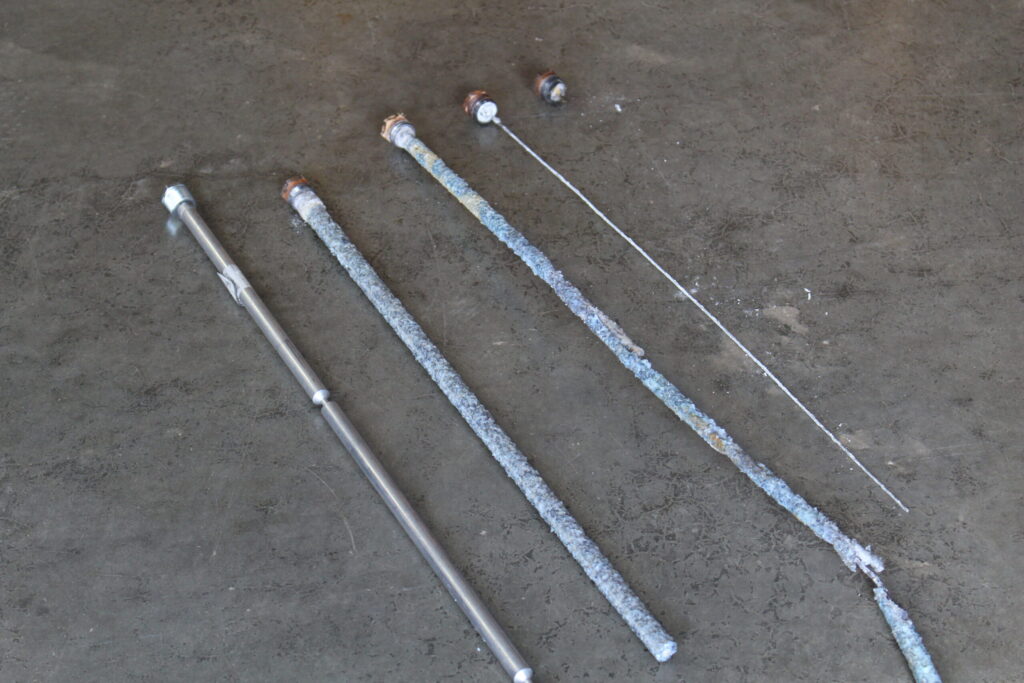
This shows the stages of an anode rod’s deterioration.
A water heater anode rod is a long metal rod, usually magnesium, aluminum, or zinc, that screws into the top of your tank and hangs down into the water. It’s designed to corrode first, so the corrosive minerals in your water attack the rod instead of your tank’s steel walls.
Since water is naturally corrosive to bare steel, without protection, the inside of your tank would start rusting from the day it was installed. The anode rod is more chemically reactive than steel, so corrosive minerals in the water attack the rod first, sacrificing itself so the tank doesn’t rust or corrode as quickly.
Over time, the rod dissolves. Once it’s fully consumed, there’s nothing left to protect the tank, and corrosion starts eating into the steel lining itself. At that point, you’re no longer looking at a $500 fix. You’re looking at a tank that’s actively rusting through from the inside, which usually ends in a leak and a full water heater replacement.
Cost of Anode Rod Replacement vs. Cost of a New Water Heater
Here’s the cost breakdown, and why most homeowners decide this repair is worth it.
Service | Typical Cost | What You’re Protecting |
|---|---|---|
Anode rod replacement | $477-$878+ | Remaining lifespan of your existing tank |
Full water heater replacement | $2,700+ | A brand-new 8-12+ year lifespan |
A new anode rod costs a fraction of what a new water heater does, which makes it one of the highest-value repairs in home plumbing. If your tank has years of usable life left, spending a few hundred dollars now to avoid a few thousand dollars later is a fairly easy decision.
Signs Your Anode Rod Needs Attention
You usually can’t see the anode rod without draining the tank and unscrewing it, but there are warning signs that tell you it’s time to check.
- A rotten egg smell in your hot water: this can happen when the rod reacts with sulfur bacteria in the water, especially in homes on well water
- Rusty, cloudy, or metallic-tasting hot water: a sign corrosion may already be reaching the tank itself
- Rumbling, popping, or cracking noises from the tank: often caused by sediment buildup, which accelerates once the rod is depleted
- Your water heater is approaching the 5-year mark and has never had the rod inspected
- You have a water softener, which speeds up anode consumption significantly from the higher levels of sodium chloride.
If you notice any of these, it’s worth scheduling an inspection before the rod is fully gone.
When Anode Rod Replacement Isn't Worth It
Replacing the rod won’t help, and may not be worth the money, in a few specific situations:
- The tank is already leaking or visibly rusted through. Once the steel itself is compromised, a new rod can’t reverse that damage.
- Your water heater is already near or past its expected lifespan. If it’s 10+ years old, it likely makes more sense to plan for replacement rather than invest in an aging unit.
- The rod is fused or seized in place from years of corrosion, which can turn a simple swap into a much more involved (and costly) repair, sometimes requiring the fitting itself to be cut and replaced.
A qualified plumber can tell you within a few minutes of inspection which category your water heater falls into.
How Often Should You Replace a Water Heater Anode Rod?
Most manufacturers recommend inspecting the anode rod every 1-3 years, with replacement typically needed every 2-5 years depending on your water quality. Consumer Reports notes that storage water heater maintenance should include periodically inspecting the anode rod, since it’s the part that protects the tank from corrosion.
Water Type | Recommended Inspection | Typical Replacement Interval |
|---|---|---|
Softened water | Annually | 1-2 years |
Hard water or well water | Annually | 2-3 years |
Soft municipal water | Every 2 years | 4-5 years |
If you’ve never had your anode rod checked, and your water heater is more than a few years old, that’s a good sign it’s time for an inspection.
DIY vs. Professional Anode Rod Replacement
Anode rod replacement is often listed as a DIY-friendly repair, and for a handy homeowner with the right tools, it can be. But there are a few things worth knowing before you attempt it yourself.
Rods are frequently seized in place after years of corrosion, and removing one without the right leverage or clearance above the tank can damage the fitting. Reinstalling the new rod also requires the correct torque; too loose and it can seep, too tight and it can crack the threads on the tank itself. Some manufacturers also require the work to be done by a licensed professional to keep the warranty intact.
Because a botched anode rod swap can turn into a leaking water heater, most homeowners find it’s worth having a licensed plumber handle it, especially the first time, or any time the rod won’t budge. Our team at Eco can also flush accumulated sediment from the tank while it’s already drained, which extends the benefit of the new rod even further.
Where This Leaves You With Your Anode Rod
For most water heaters still within their expected lifespan, replacing the anode rod is worth it. It’s a small, inexpensive step that protects a much larger investment. If you’ve noticed a sulfur smell, discolored water, or you can’t remember the last time anyone checked your tank, that’s exactly the situation where a $477-$878+ repair now saves you from a $2,700+ replacement later.
If you’re weighing whether to repair or replace your unit altogether, our guide on Tankless vs. Traditional Water Heaters can help you think through what a replacement would look like down the road.
Our plumbers at Eco Plumbers, Electricians, and HVAC Technicians inspect and replace anode rods across Greater Columbus, Dayton, Cincinnati, and Chillicothe every week, and we’ll always tell you honestly whether a new rod makes sense or whether your money is better spent elsewhere. If you’re not sure which situation you’re in, schedule a water heater inspection, and we’ll walk you through it.
FAQs
What's the difference between magnesium, aluminum, and zinc anode rods?
Magnesium is the most common and works well in most water conditions, but it can react with sulfur bacteria and cause odor. Aluminum and zinc rods are often used as a fix for that smell, or in homes with harder water, since they're less reactive.
Does a water softener affect how often I need to replace the rod?
Yes. Softened water is more conductive, which speeds up how quickly the rod corrodes. Homes with a softener often need the anode rod checked annually instead of every few years.
Do tankless water heaters have anode rods?
No. Tankless units don't store water, so there's no tank lining to protect and no anode rod involved. This is one of the few maintenance items that's unique to tank-style water heaters.
What's a powered anode rod, and is it worth the extra cost?
A powered anode rod uses a small electrical current instead of sacrificing metal, so it never fully depletes and doesn't need periodic replacement. It costs more upfront, but can be a good fit for homes with especially hard or softened water where standard rods wear out fast.
Can sediment be flushed from the tank at the same time as an anode rod replacement?
Yes, and it's worth doing. Since the tank is already partially drained for the rod swap, flushing out accumulated sediment at the same time is an easy add-on that helps your water heater run more efficiently.
Is it normal for my hot water to smell different for a few days after a new rod is installed?
A faint metallic smell right after installation is common and usually fades on its own within a few days as the new rod settles in. If a strong odor persists beyond that, it's worth having your plumber take a second look.