



What's Ahead
Few things are more concerning than walking into your bathroom, basement, or kitchen and being hit with the unmistakable smell of sewage (or, for lack of a better term… poop). Not only is the odor unpleasant, but it can leave you wondering where it’s coming from, whether it’s a health concern, and if you’re about to face an expensive plumbing repair.
At Eco Plumbers, Electricians, and HVAC Technicians, we’ve helped Ohio and Kentucky homeowners diagnose and resolve plumbing problems that can cause sewer odors in the home. We know that a sewage smell doesn’t automatically mean your sewer line has failed. The cause could be as simple as a dry P-trap, but it could also point to a failed toilet seal, blocked plumbing vent, damaged drain, sewer-line issue, or septic system problem. Finding the source is the first step toward knowing how serious the issue is and what it will take to fix it.
Common Reasons Your House Smells Like Sewage
A sewage smell inside your home is often a sign that something in your plumbing or drainage system isn’t working as it should. In many cases, sewer gas is finding a way into your living space instead of staying contained within the plumbing system or venting safely outside.
Your home’s plumbing has built-in safeguards to prevent this. Drain traps hold water to create a barrier between your home and the sewer system, while plumbing vents help direct sewer gases outside. When a trap dries out, a seal fails, a vent becomes blocked, or another part of the drainage system develops a problem, you may begin to notice that unmistakable sewage odor.
The 7 most common causes of sewage smells in a home include:
- A dry P-trap
- A damaged or failed toilet wax ring
- A blocked plumbing vent
- A clogged or dirty drain
- A damaged drain or sewer pipe
- A sewer-line blockage
- A septic system problem
Let’s look at each of these causes and the warning signs that can help you determine what might be happening in your home.
1. Dry P-Traps Can Allow Sewer Gas Into Your Home
If the sewage smell is strongest near a sink, shower, tub, or floor drain that isn’t used often, a dry P-trap is one of the first things to check.
A P-trap is the curved section of pipe beneath a drain that holds a small amount of water. This water creates a barrier that prevents sewer gases from traveling through the drain and into your home.
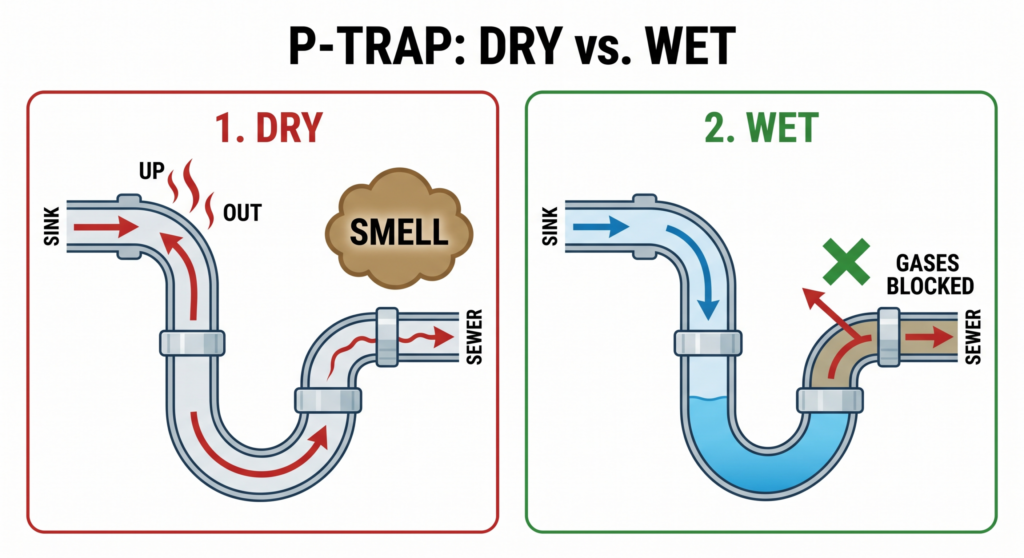
When a fixture goes unused for an extended period, that water can evaporate. This is especially common with:
- Guest bathrooms
- Basement floor drains
- Utility sinks
- Rarely used showers or tubs
Fortunately, the fix may be simple. Run water through the affected fixture for a minute or two to refill the P-trap. If the smell disappears and stays away, a dry trap was likely the cause.
If the odor returns quickly despite regular use, however, there may be another plumbing issue that needs further investigation.
2. A Failed Toilet Seal Can Cause Sewage Odors
If the sewage smell is strongest around the base of your toilet, the seal between the toilet and drain may be failing.
Most toilets use a wax ring or similar seal to create an airtight and watertight connection to the drain. If that seal becomes damaged, worn, or loose, sewer gas can escape into your bathroom.
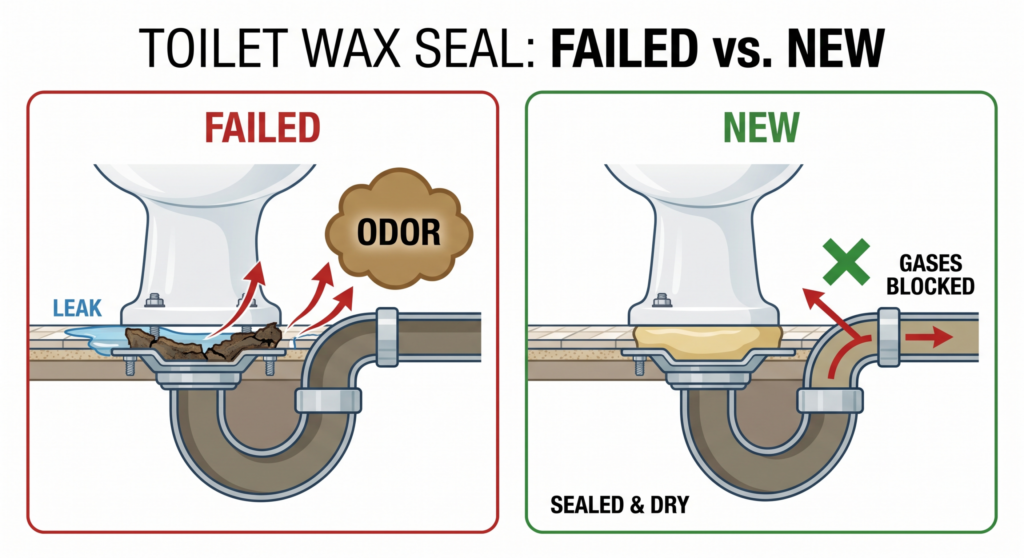
Signs of a failed toilet seal can include:
- A sewage smell concentrated around the toilet
- Water around the base of the toilet
- A toilet that rocks or shifts
- An odor that gets stronger after flushing
A sewage smell near your toilet does not always mean the wax ring has failed. A nearby drain or another plumbing issue could also be responsible. However, if the odor is consistently strongest at the toilet, especially if the toilet rocks or leaks around the base, it is a good idea to have the seal inspected.
3. Blocked Plumbing Vents Can Lead to Sewage Smells
A blocked or damaged plumbing vent can prevent sewer gases from properly escaping your plumbing system, which may cause odors inside your home.
Plumbing vents typically extend through the roof and help maintain proper airflow and pressure within your drainage system. They also provide a path for sewer gases to safely escape outside.
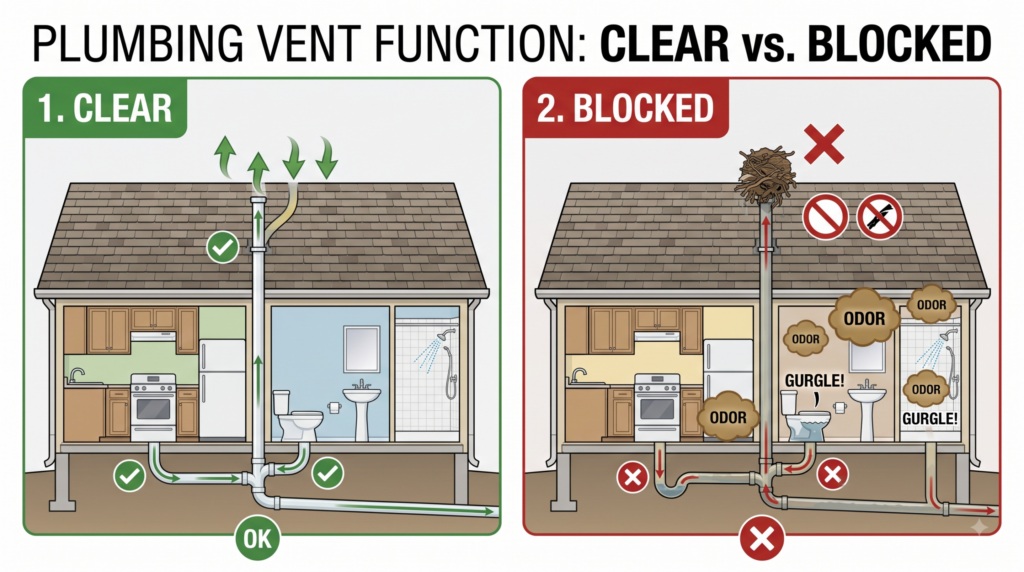
If a vent becomes blocked or is not working properly, you may notice:
- Sewer odors inside your home
- Gurgling sounds from drains
- Slow drainage
- Toilets that do not flush normally
- Water being pulled out of drain traps
Leaves, debris, animal nests, and other obstructions can interfere with a plumbing vent.
Because inspecting or clearing a plumbing vent often requires roof access, this is typically best left to a professional plumber. A plumber can safely inspect the vent and determine whether the problem is a blockage or another issue within your drainage system.
4. Clogged or Dirty Drains Can Create Sewage-Like Odors
Sometimes an odor that smells like sewage is actually coming from buildup inside the drain itself.
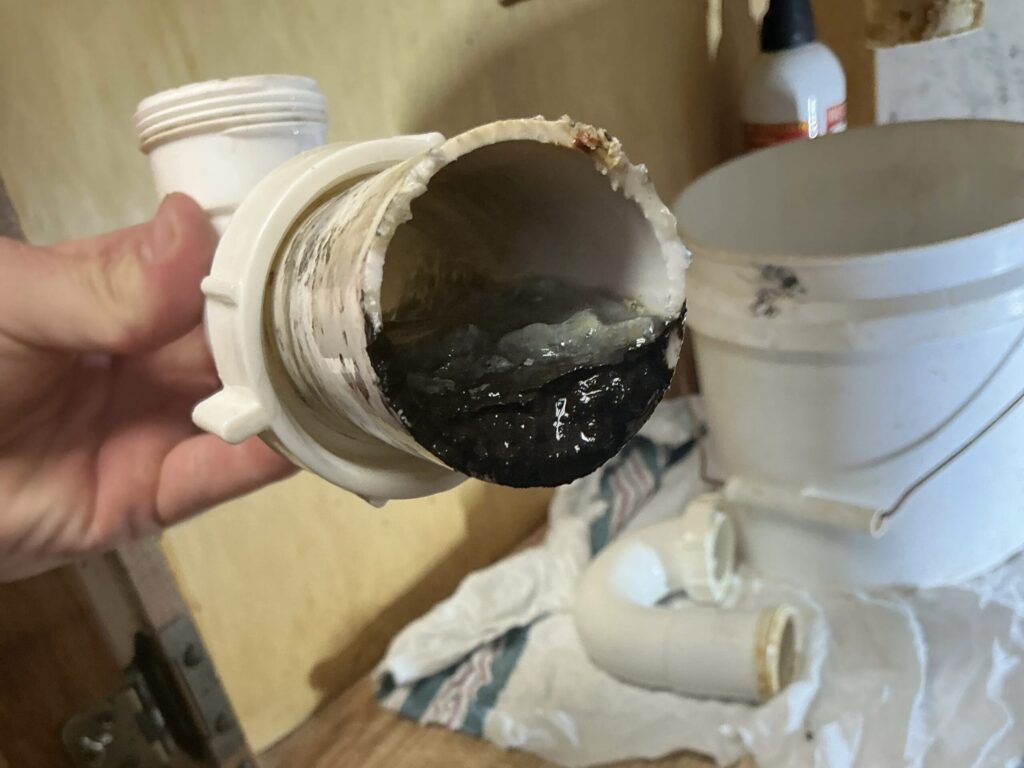
Hair, soap residue, food particles, grease, and other organic material can collect inside drains. As that buildup sits and decomposes, it can produce strong, unpleasant odors.
A clogged or dirty drain is more likely to be the cause when the smell is isolated to one fixture. You may also notice:
- Slow drainage
- Gurgling sounds
- Water backing up
- Odors that become stronger when water runs
If only one drain smells or drains slowly, the problem may be localized to that fixture. If several drains are slow, gurgling, or producing sewage odors at the same time, it could point to a larger issue within your drainage or sewer system.
5. Damaged Drainpipes Can Allow Sewer Gas Into Your Home
A cracked, loose, disconnected, or deteriorated drainpipe can allow sewer gas to escape into your home.
Unlike a clogged drain or dry P-trap, damaged pipes can be harder to identify because they are often hidden. The affected pipe could be:
- Inside a wall
- Beneath a floor
- In a crawl space
- In a basement or utility area
- Underground
Because of this, the sewage smell may seem to come from a wall, floor, cabinet, or an entire area of your home instead of a specific drain. Depending on the damage, you may also notice moisture, water stains, leaks, or an odor that keeps returning.
If you have a persistent sewage smell but cannot trace it to a specific fixture, a professional plumber can inspect your drainage system to determine whether a damaged or disconnected pipe is the cause.
6. Main Sewer Line Problems Can Cause Widespread Sewage Smells
If sewage odors are affecting multiple areas of your home, especially along with drainage problems, the issue may be coming from your main sewer line.
Unlike a problem with a single drain, main sewer line issues often affect several plumbing fixtures at the same time. Warning signs can include:
- Multiple slow drains
- Gurgling toilets or drains
- Water backing up into a tub or shower
- Sewage odors in several rooms
- Recurring drain backups
- Problems that return after clearing a drain
For example, if flushing your toilet causes water to back up into a nearby tub or shower, the problem may be deeper in your drainage system rather than isolated to one fixture.
Main sewer line problems can be caused by blockages, damaged pipes, tree root intrusion, or deterioration. Because the right repair depends on the cause and condition of the pipe, a plumber should diagnose the problem before recommending a sewer line repair or replacement.
7. Septic System Problems Can Cause Sewage Odors
If your home has a septic system, persistent sewage odors could indicate a problem with the septic tank, drain field, or the plumbing connected to the system.
In addition to sewage smells, signs of a potential septic system problem can include:
- Slow drains throughout your home
- Recurring plumbing backups
- Sewage odors inside or outside the home
- Unusual wet or soggy areas near the drain field
However, a sewage smell does not automatically mean your septic system needs to be pumped, repaired, or replaced. Homes with septic systems can still experience common plumbing issues such as dry P-traps, failed toilet seals, or clogged drains.
If the smell persists or is accompanied by slow drains or backups throughout your home, have the system inspected to identify the source before assuming you need a major septic repair. However, here at Eco, we unfortunately do not work on septic tanks and cannot pump them out.
A Sewage Smell in Your House Can Be a Health Concern
A persistent sewage smell in your home should not be ignored. Sewer gas can contain a mixture of gases produced as waste breaks down, and the concentration can vary depending on the source of the problem.
Because you cannot determine the severity based on smell alone, take strong or recurring odors seriously. If it is safe to do so, ventilate the affected area and have the source identified.
If anyone in your home experiences concerning physical symptoms (dizziness or lightheadedness, nausea, difficulty breathing, unusual drowsiness, confusion, weakness, or loss of consciousness in severe cases), leave the affected area and seek appropriate medical or emergency guidance.
If you are unsure whether you are smelling sewer gas, natural gas, or another potentially hazardous substance, do not try to identify it by smell alone. Leave the area and contact the appropriate utility or emergency service immediately.
Signs You Should Call a Plumber for a Sewer Smell
Some causes of sewage odors, such as a dry P-trap, may have a simple solution. If the smell keeps returning or you notice other plumbing problems at the same time, it may be time to call a professional plumber.
Consider scheduling a plumbing inspection if:
- The sewage smell keeps returning
- The odor is strong or present throughout your home
- Multiple drains are slow or backing up
- Toilets or drains regularly gurgle
- Wastewater backs up into sinks, tubs, or showers
- The smell is concentrated around a toilet and does not go away
- You suspect a damaged drain or sewer pipe
- You cannot identify where the smell is coming from
Multiple affected fixtures can be a sign that the problem extends beyond a single drain.
A plumber can inspect your plumbing system to identify where the odor is coming from and determine the appropriate repair. If a main sewer line problem is suspected, a sewer camera inspection may be recommended to look for blockages, damage, tree root intrusion, or other problems inside the pipe.
When the source of a sewer smell cannot be easily identified, another diagnostic option is a smoke test. During a smoke test, our technicians cap off portions of the vent and underground sewer system and introduce non-toxic diagnostic smoke into the drainage system. If there is an improperly sealed connection, crack, or other opening, smoke can escape from that location and help us pinpoint where sewer gas may be entering your home.
At Eco Plumbers, a smoke test requires two technicians and must be scheduled at least 24 hours in advance. We also notify the local fire department before performing the test because some smoke may exit through the home’s roof vent during the process.
Identifying the cause first can help you avoid paying for a repair that does not actually solve the problem.
Questions to Ask Before Approving a Sewer Smell Repair
Before agreeing to a plumbing repair, make sure you understand what is causing the sewage smell and why the recommended solution will fix it. Depending on the source, the repair could be relatively simple or require more extensive work.
Ask your plumber questions such as:
- What is causing the sewage smell?
- How did you confirm the source of the problem?
- Is the issue limited to one fixture, or does it affect the larger drainage system?
- What repair options do I have, and what are the pros and cons of each?
- What could happen if I delay the repair?
- Can you show me the problem or any sewer camera footage used in the diagnosis?
- Is there a less invasive repair option that would still solve the problem?
A trustworthy plumber should be able to explain what is wrong, show you how they reached that diagnosis, and clearly explain why the recommended repair makes sense.
At Eco, we believe homeowners should understand their options before making a decision about their home. Do not be afraid to ask questions, especially when a repair involves high cost or work on your sewer line.
Take the Next Step Toward Getting Rid of Sewage Smells
Now that you know the most common causes and warning signs, you can better determine whether there is a simple fix you can try yourself or whether the problem needs professional attention. If the smell keeps returning, affects multiple areas of your home, or is accompanied by slow drains, gurgling, or backups, having the source professionally diagnosed is the safest next step.
If you have never scheduled a plumbing service appointment before, you may be wondering what happens once a plumber arrives, what they will inspect, and what questions you should ask. Your next step is to read our guide, What to Expect During a Plumbing Service Visit, so you can feel prepared for the appointment and know what to expect from the diagnostic and repair process.
At Eco Plumbers, Electricians, and HVAC Technicians, we help homeowners throughout Ohio and Kentucky understand what is happening with their plumbing before making decisions about repairs. If you cannot identify the source of the sewage smell or believe you may have a larger plumbing problem, our team can inspect your system, explain what we find, and walk you through your options.
FAQs
Can weather cause a sewage smell in my house?
Changes in temperature, wind, rainfall, and air pressure can sometimes make existing sewer odors more noticeable. Heavy rain can also contribute to drainage or sewer system problems in some situations. If the smell consistently appears during certain weather conditions, take note of when and where it occurs. That information can help a plumber narrow down the source.
Why does my house smell like sewage after it rains?
A sewage smell that appears after heavy rain may be related to changes in your drainage system, sewer system, or septic system. Saturated ground and increased water entering sewer systems can sometimes expose an existing drainage problem. If the odor repeatedly appears after rainfall, especially along with slow drains or backups, consider having the system inspected.
Can a washing machine cause a sewage smell?
Yes. If the smell is strongest near your washing machine or laundry room, the odor may be related to the washer drain, standpipe, drain trap, or another part of the nearby plumbing. Pay attention to whether the smell becomes stronger while the washing machine is draining, since this can provide an important clue for diagnosing the problem.
Will a sewage smell go away on its own?
It depends on the cause. A temporary odor may disappear after an unused drain trap is refilled, but a recurring sewage smell should not simply be covered up or ignored. If the odor keeps returning, there is likely an underlying reason that needs to be identified.
Can sewer smells come through my HVAC system?
Your HVAC system typically is not the original source of a sewage odor, but airflow through your home can sometimes spread an odor from another location. This can make it seem as though the smell is coming from your vents. If you notice sewage odors when your heating or cooling system runs, identifying the original source of the smell is important before assuming there is a problem with the HVAC equipment.