

What's Ahead
Winter mornings shouldn’t come with a side of worry. But if your furnace has been running for years without a professional look-over, or if you’ve simply never thought to have one done, that quiet hum in the basement could be hiding more than a dusty filter.
Is my furnace actually safe to run?
What could go wrong if I skip an inspection?
If those questions have crossed your mind, you’re asking the right ones. At Eco Plumbers, Electricians, and HVAC Technicians, our technicians perform combustion analysis, heat exchanger inspections, and full safety diagnostics on furnaces throughout Greater Columbus, Dayton, Cincinnati, and Southern Ohio every heating season. We see firsthand what a furnace looks like when it’s been neglected, and what a safety check catches before it becomes a real problem.
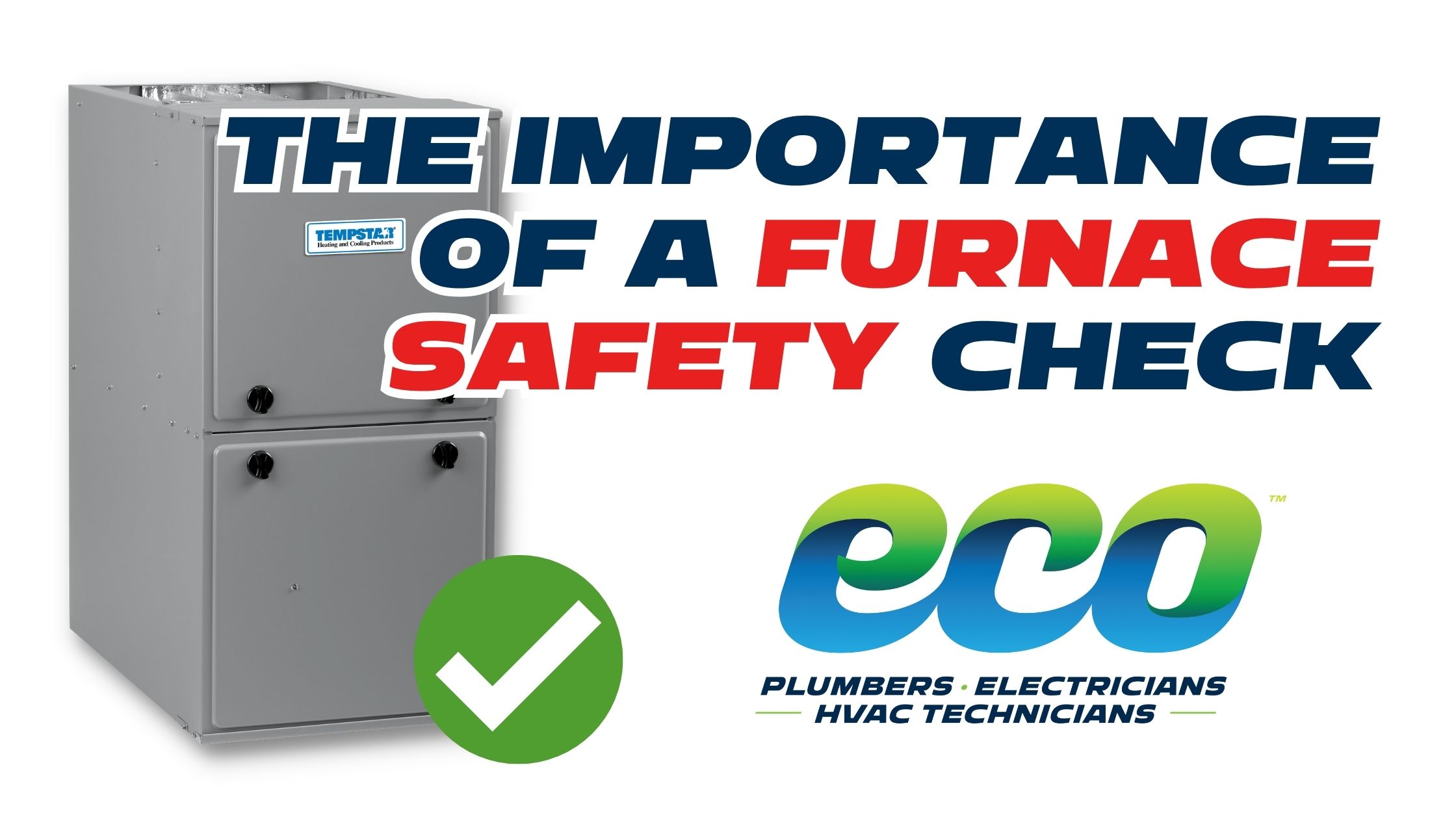
A furnace safety check comes down to three things: confirming your furnace is burning fuel safely, making sure nothing is putting your family at risk of a carbon monoxide or fire hazard, and catching mechanical wear before it becomes a breakdown.
A Furnace Safety Check Protects Your Home, Not Just Your Furnace
A furnace safety check is a diagnostic inspection that confirms your furnace is burning fuel cleanly, venting exhaust outside your home correctly, and free of the mechanical wear that leads to a carbon monoxide leak or a heating fire. It’s built around safety first, efficiency second.
Most homeowners think of furnace maintenance as a way to avoid a breakdown on the coldest night of the year. While that’s true, our furnace clean and check exists because gas furnaces burn fuel, and anything that burns fuel inside your home has the potential to create risk if it isn’t working correctly. That’s not meant to scare you. It’s meant to explain why this particular piece of equipment gets more attention than, say, your dishwasher.
During a safety check, a technician isn’t just listening for rattles or checking your filter. They’re confirming that combustion is happening cleanly, that exhaust gases are leaving your home the way they should, and that nothing inside the unit has deteriorated to the point of creating a hazard. That’s a fundamentally different job than a basic tune-up, and it’s why safety checks matter even for furnaces that seem to be running fine.
The Real Numbers Behind Heating Equipment Risk
According to the National Fire Protection Association (NFPA), U.S. fire departments respond to an estimated average of roughly 38,900 home heating equipment fires, resulting in about 432 civilian deaths, 1,352 injuries, and $1.1 billion in property damage each year.
That figure covers all types of heating equipment, including furnaces, boilers, space heaters, wood stoves, and fireplaces, not furnaces alone. Space heaters and heating stoves actually account for the largest share of those incidents. But furnaces are still part of that picture, and a leading cause of heating fires is equipment that hasn’t been properly cleaned or maintained.
There’s a second, quieter risk that gets less attention: carbon monoxide. According to the Centers for Disease Control and Prevention (CDC), more than 400 Americans die each year from unintentional carbon monoxide poisoning not linked to fires, and more than 100,000 visit the emergency room because of it.
Carbon monoxide is colorless and odorless, which is exactly why fuel-burning furnaces need to be checked by someone who knows what to look for. A crack in a heat exchanger, a blocked vent, or a ventilation issue can allow carbon monoxide to enter your living space without any obvious warning sign.
Neither of these statistics means your furnace is dangerous. Most furnaces run for years without incident. But both point to the same conclusion: heating equipment carries a safety dimension that a routine visual check from a homeowner simply isn’t equipped to catch.
What Happens During a Professional Furnace Safety Check
When our technicians perform a furnace safety check, they’re looking at more than efficiency. Here’s what’s typically included:
- Combustion analysis: Testing the exhaust to confirm your furnace is burning fuel cleanly and not producing excess carbon monoxide.
- Heat exchanger inspection: Checking for cracks or corrosion, one of the conditions we check for that can allow carbon monoxide into your home if left unaddressed.
- Ventilation and exhaust check: Confirming that flues and vent pipes are clear, properly connected, and routing exhaust outside as designed.
- Gas line and connection inspection: Looking for leaks or loose fittings on gas-fired systems.
- Electrical and safety control testing: Verifying that limit switches, flame sensors, and safety shutoffs are functioning correctly.
- Carbon monoxide detector verification: Confirming your home’s CO detectors are working and positioned appropriately, and recommending placement if you don’t have one outside each sleeping area and on every level of your home. Most CO detectors expire within 7 to 10 years.
This is different from simply changing a filter or listening for strange noises. It’s a diagnostic process built specifically around identifying the conditions that lead to fires or carbon monoxide exposure, along with catching the mechanical issues that shorten a furnace’s lifespan.
How Often Should You Have a Furnace Safety Check?
Most manufacturers and HVAC professionals recommend a furnace safety inspection once a year, ideally in early fall before the heating season begins. This timing matters for two reasons. First, it gives a technician the chance to catch and resolve issues before your furnace is running daily. Second, furnaces that sit unused for months can develop problems, like nesting debris in vents or corrosion, that aren’t obvious until the system fires up again.
If your furnace is more than 10-15 years old, has never been professionally inspected, or you’ve noticed a persistent odor, soot near the unit, or unexplained headaches when you’re home, don’t wait for your annual check-up. Those are signs worth having looked at right away. If you’re seeing warning signs like these, read our guide on the signs your furnace needs repair to understand what a technician will look for before your visit and make sure to schedule an appointment.
What a Furnace Safety Check Means for Your Home
A furnace safety check confirms that the equipment quietly heating your home isn’t creating a carbon monoxide or fire risk you can’t see or smell. It’s about more than keeping your system efficient or avoiding a breakdown.
That’s not something to be anxious about. It’s something to be proactive about. A yearly inspection from a licensed technician gives you a clear answer instead of a guess, and it’s one of the simplest things you can do to protect your family alongside your home.
If it’s been more than a year since your furnace was professionally checked, or you’ve never had one done, schedule a furnace safety inspection with our team. And if you want ongoing peace of mind without having to remember to book it every fall, our EcoFi Advantage Membership includes seasonal heating clean and checks so your furnace gets inspected before you even have to think about it.
At Eco Plumbers, Electricians, and HVAC Technicians, we’ve been keeping homes across Greater Columbus, Dayton, Cincinnati, and Southern Ohio warm and safe for years. A furnace safety check is a small appointment that answers a big question: is the equipment heating your home doing its job safely?
FAQs
How long does a furnace safety check take?
At Eco, our furnace safety inspections typically take 2-3 hours. That's longer than a quick filter-and-listen visit because we're running a full combustion analysis, inspecting the heat exchanger, checking gas line connections, testing electrical safety controls, and confirming your vent system is routing exhaust outside your home correctly, not just glancing at the unit and calling it done.
If you're getting an inspection from another company, it's worth asking exactly what they check and how long it typically takes. A furnace safety check that's over in 15 minutes usually isn't testing combustion or inspecting the heat exchanger. Knowing what should be included helps you tell a real safety inspection apart from a basic filter swap.
Can I check for carbon monoxide leaks myself?
You can and should have working carbon monoxide detectors in your home, but they only alert you once CO is already present at a certain concentration. A professional combustion analysis checks for the underlying issues, like a cracked heat exchanger or venting problem, before they lead to a dangerous buildup.
Does a furnace safety check cost extra, or is it part of regular maintenance?
At Eco, safety clean and checks are a standard part of our furnace maintenance visits. If you're getting a tune-up elsewhere, ask specifically whether combustion analysis and heat exchanger inspection are included, since some basic tune-ups only cover filter changes and a visual inspection.
What are the warning signs that my furnace needs an inspection sooner rather than later?
Watch for soot or black staining around the furnace cabinet or vent pipe, a burning or metallic smell that doesn't clear after the first burn of the season, a flame that changes when the blower kicks on, repeated shutdowns or short cycling, rust flakes in the burner area, or a vent pipe that's rusted at the joints or sagging. Any of these warrant a same-week inspection rather than waiting for your annual visit.
If anyone in your home is experiencing headaches, dizziness, or flu-like symptoms that improve when they leave the house, treat that as an emergency, not something to schedule around. Get everyone into fresh air, call your gas utility or fire department to check for a carbon monoxide leak, and don't go back inside until it's cleared.