


What's Ahead
Winter has settled in, and your outdoor faucet has frozen solid, or a small leak you’d been meaning to fix froze right along with it. Either way, that spigot isn’t doing you any good right now, and a frozen faucet is one of those small-sounding problems that can turn into a much bigger bill if the pipe behind it has already split.
At Eco Plumbers, Electricians, and HVAC Technicians, our plumbers see a spike in outdoor faucet calls every time Columbus, Dayton, Cincinnati, or Southern Ohio gets its first hard freeze of the season, and we’ve priced out everything from a repair to a full pipe replacement behind drywall.
This guide walks you through what a frozen outdoor faucet repair actually costs, what makes the price go up or down, and how to tell whether you’re dealing with a simple thaw or a burst pipe that needs a professional today.
Why Outdoor Faucets Freeze in the First Place
Outdoor faucets freeze because they’re the part of your plumbing system most exposed to the cold, and the water trapped inside has nowhere to go when it expands.
According to the U.S. Geological Survey, water’s density drops by about 9% as it turns to ice, meaning that same water takes up more space once frozen, and that expansion puts tremendous pressure on the pipe or faucet holding it, whether it’s made of copper, PVC, or brass. That’s why outdoor hose bibs and exposed water supply pipes are among the parts of a home’s plumbing that freeze most often, right alongside pipes running through unheated garages, crawl spaces, and attics.
If your home has an older-style hose bib rather than a frost-free (or “freeze-proof”) model, the shutoff valve sits right at the faucet itself, out in the cold, instead of a few feet inside your home’s heated wall. That design difference is the single biggest reason some homes get through a Columbus winter without a single frozen faucet while others deal with it every year.
How Much Does a Frozen Outdoor Faucet Repair Cost?
Most frozen outdoor faucet repairs cost between $150 and $450, depending on whether the faucet itself needs replacing or the pipe behind it has also failed. Here’s a general breakdown of what homeowners typically pay:
Type of Repair | Estimated Cost | Details |
Diagnostic and Thawing only (no damage found) | $129-920+ | Diagnostic visit and safe thawing if you can’t clear it yourself |
Washer or seal replacement | $383+ | For a faucet that’s dripping or won’t shut off after thawing, but isn’t cracked |
Standard hose bib replacement | $752+ | Faucet body cracked from ice expansion, no pipe damage behind the wall |
Modern frost-free hose bib upgrade | $974+ | Replaces a standard bib with a freeze-resistant model |
Pipe repair behind the wall | $920+ | Needed when the supply line itself splits, often requiring drywall or siding access |
These are Eco’s general price ranges, and your final number depends on where the faucet sits, how easy it is to access the pipe behind it, the new shutoff valve inside for proper winterization, and whether any drywall, siding, or insulation needs to be opened up and repaired afterward.
What Factors Affect the Price of Your Repair
Your final price comes down to a handful of specific factors, and knowing which ones apply to your situation is the fastest way to guess where you’ll land in that range.
Whether the Pipe Behind the Faucet Cracked
This is the single biggest factor. A faucet that froze and cracked at the spout is a straightforward swap. A faucet where the freeze traveled back into the supply line means your plumber has to locate the crack, which may be inside a finished wall, and repair or replace that section of pipe before touching the faucet itself.
How Long the Faucet Was Frozen Before You Noticed
The longer water sits frozen and expands, the more likely it’s caused damage beyond the faucet body. A faucet caught within a day or two of a freeze is far more likely to be a simple fix than one that went unnoticed through an entire cold snap, especially if you were away from home.
Access to the Pipe
Many homeowners choose to replace a standard hose bib with a frost-free model at the same time, since the labor to access the pipe is already being paid for either way. Some companies, like Eco, only offer frost-free hose bibs when it comes to replacement so you’re already covered. Though, upgrading during a repair typically adds only $50 to $100 over a standard replacement, and it can prevent the same freeze damage from happening again next winter.
Signs Your Outdoor Faucet Is Frozen, Not Just Broken
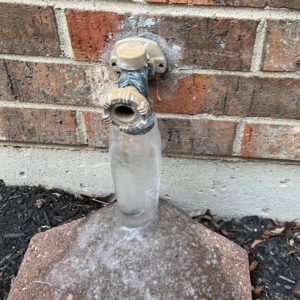
Before you assume the worst, it helps to know what a frozen faucet actually looks like versus one that’s already cracked.
Signs your faucet is frozen, but likely still intact:
- No water flow at all when you turn the handle, with no dripping or hissing sound
- The faucet handle feels unusually stiff or won’t turn
- Frost or ice visible on the outside of the faucet or the pipe just behind it
Signs the freeze has already caused damage:
- A bulge or split visible in the metal
- Water pooling near the foundation
- A hissing sound coming from inside a nearby wall
- A water stain spreading on interior drywall near where the faucet sits
If you notice any of the damage signs above, stop using that faucet immediately and shut off the water supply if you can reach the shutoff valve, then call a plumber. Those are signs the freeze already caused a break, and running water through it will only make the damage worse.
Can You Thaw a Frozen Outdoor Faucet Yourself?
In many cases, yes, if you catch it early and the faucet hasn’t already cracked. Open the faucet, then apply gentle heat with a hair dryer, an electric heating pad, or a towel soaked in hot water, working from the faucet back toward the house. Never use an open flame, a blowtorch, or a space heater directly against a pipe, since that can scorch nearby materials or, in the case of plastic pipe, melt it outright.
If you don’t see any water within a few minutes of applying heat, or you can’t tell where along the pipe the blockage sits, that’s your signal to stop and call a professional rather than risk a pipe that’s already under pressure. A plumber can safely locate and thaw a stubborn freeze and check the rest of that line for hairline cracks you wouldn’t be able to spot yourself.
How to Prevent Your Outdoor Faucets From Freezing Again
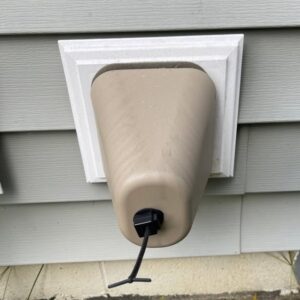
The best way to avoid paying for a frozen faucet repair is to winterize your outdoor faucets before the first hard freeze hits:
- Disconnect and drain garden hoses, and store them for the season
- Shut off the interior valve that feeds each outdoor faucet, if your home has one, then open the outdoor faucet to drain any remaining water
- Install an insulated faucet cover over each hose bib
- Consider upgrading standard hose bibs to frost-free models, especially if you’ve had a freeze before
- Keep the temperature in unheated spaces like garages and crawl spaces above freezing when possible
Taking twenty minutes to do this each fall costs far less than any repair on this list. If your home has had a frozen or burst outdoor faucet more than once, that’s usually a sign it’s worth upgrading to frost-free hardware rather than repeating the same repair every winter.
What to Do Next If Your Outdoor Faucet Is Frozen
Frozen outdoor faucets are frustrating, but they’re also one of the more predictable plumbing problems homeowners face every winter, and that predictability means you have real control over the cost. A faucet caught early and thawed correctly is a quick fix, while one left frozen too long can turn into a major repair or replacement involving your walls.
If your outdoor faucet won’t run, feels frozen solid, or you’ve already spotted signs of a crack, the safest next step is to have it looked at before you turn the water back on. And if this is the second or third winter you’ve dealt with a frozen faucet in the same spot, it may be time to talk about a permanent fix rather than a repeat repair.
Our team at Eco Plumbers, Electricians, and HVAC Technicians handles frozen and burst outdoor faucet repairs across the Columbus, Dayton, Cincinnati, or Southern Ohio areas all winter long, from simple thaws to full pipe replacement. If a slow drain or a running toilet has also been on your list this season, our plumbing services page covers what else our team can take a look at while they’re already on-site. When you’re ready, schedule a plumbing inspection, and our plumbers will give you an upfront price before any work begins.
FAQs
What temperature does it take for an outdoor faucet to freeze?
Pipes and faucets generally start to freeze once temperatures stay at or below 20°F for several hours, though wind, how exposed the faucet is, and how well-insulated your home's exterior walls are can all shift that threshold. A single quick dip below freezing overnight is less risky than a sustained cold snap.
What's the difference between a hose bib and a spigot?
These terms all describe the same fixture, an outdoor water valve you connect a hose to, and plumbers use them interchangeably depending on region and habit. "Sillcock" is the more technical term, while "hose bib" and "spigot" are the names most homeowners use.
Does heat tape actually prevent outdoor pipes from freezing?
Heat tape, an electrical cable wrapped around exposed pipe, can help protect pipes that run through unheated spaces like crawl spaces or garages, but it needs to be rated for outdoor use and checked each season for wear. It's not a substitute for insulating or disconnecting an outdoor faucet, just an added layer of protection for the pipe behind it.
Should I shut off the water to my outdoor faucets for the entire winter?
If your home has an interior shutoff valve dedicated to each outdoor faucet, closing it for the season and draining the line is one of the most effective ways to prevent a freeze, since there's no standing water left to expand. Not every home has this setup, so it's worth checking with a plumber if you're not sure whether yours does.
How can I tell if I already have a frost-free hose bib?
Frost-free models are usually longer than standard hose bibs, often 6 to 12 inches, since the actual shutoff valve sits further back inside the heated wall rather than at the spout. If you can see a long tube extending from the exterior wall to the handle, you likely already have one installed.