

What's Ahead
There’s nothing like watching the water rise in your toilet bowl to make you regret not owning the right tool for the job. A cheap, flimsy plunger from the back of a closet often makes a clog worse instead of better, leaving you with a mess and a toilet that still won’t flush.
At Eco Plumbers, Electricians, and HVAC Technicians, our plumbers clear stubborn toilet clogs every single day, and we know firsthand which plungers actually work and which ones just push water around.
The best plungers for a toilet involve: choosing a flange plunger over a standard cup plunger, picking the right size and handle length for your bathroom, and knowing when a plunger won’t cut it and it’s time to call a plumber.
What Is the Best Type of Plunger for a Toilet?
A flange plunger is the best type of plunger for a toilet. Unlike the flat, cup-shaped plunger most people picture, a flange plunger has an extra rubber flap, called a flange, that extends from the bottom of the cup. That flange tucks directly into your toilet’s drain opening, creating a much tighter seal than a flat cup ever could.
According to The Home Depot’s plunger buying guide, flange plungers are built specifically for toilets because their sleeve-like extension seals against the curved drain opening, while flat cup plungers struggle to hold that same seal. The tighter the seal, the more force gets driven directly into the clog instead of leaking out around the edges.
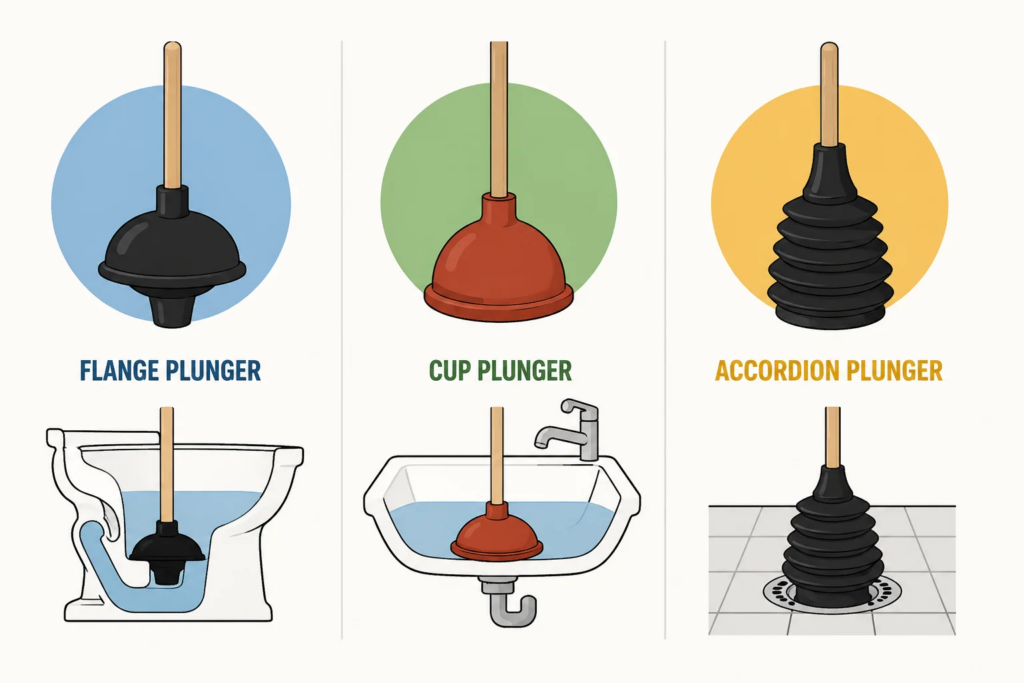
You’ll typically come across three main plunger types when shopping:
- Flange plungers – Best for toilets. The flange folds out for toilet use and tucks in for flat-surface use.
- Cup plungers – Best for sinks, tubs, and showers. The flat, rounded head is designed for flat drain openings, not curved toilet bowls.
- Accordion plungers – Made of hard plastic with a rigid, expandable body. These create strong force for stubborn clogs, though the rigid material can make it harder to form a tight seal compared to rubber.
If you only buy one plunger for your bathroom, make it a flange plunger. It’s the most versatile option since the flange folds in for flat surfaces, too.
Best Toilet Plunger Brands in 2026: Our Top Picks
If you’d rather not guess which plunger to grab off the shelf, these three consistently perform best in independent testing and homeowner reviews.
1. Korky BeehiveMAX Toilet Plunger (Best Overall)
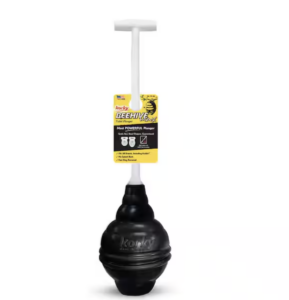
Best For: Homeowners who want the strongest clog-clearing power in a simple, no-frills design
Typical Cost: $15-$20+
The Korky BeehiveMAX is a favorite among plumbers and independent testers alike. Its beehive-shaped rubber flange conforms to irregular and oblong bowl shapes, including modern high-efficiency toilets, and its T-handle gives you a secure two-handed grip when you need extra force. It’s made from non-marking rubber, so it won’t scuff your toilet bowl.
If you want one dependable plunger that clears tough clogs without a lot of extra bells and whistles, the BeehiveMAX is the one to buy.
2. OXO Good Grips Toilet Plunger and Canister (Best for Hygiene and Storage)
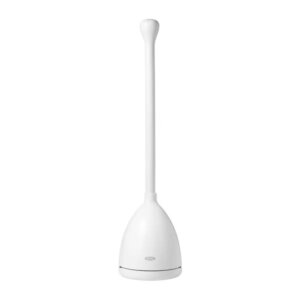
Best For: Homeowners who want strong performance without a wet plunger sitting exposed on the bathroom floor
Typical Cost: $25-$30+
The OXO Good Grips Toilet Plunger and Canister pairs a durable rubber flange head with a canister that automatically springs open when you lift the plunger and snaps shut when you put it away. The drip tray has ventilation slots so leftover water evaporates instead of pooling, which keeps the plunger drier and more sanitary between uses.
If keeping your plunger out of sight and properly dried out matters as much as clearing the clog, this is the better pick.
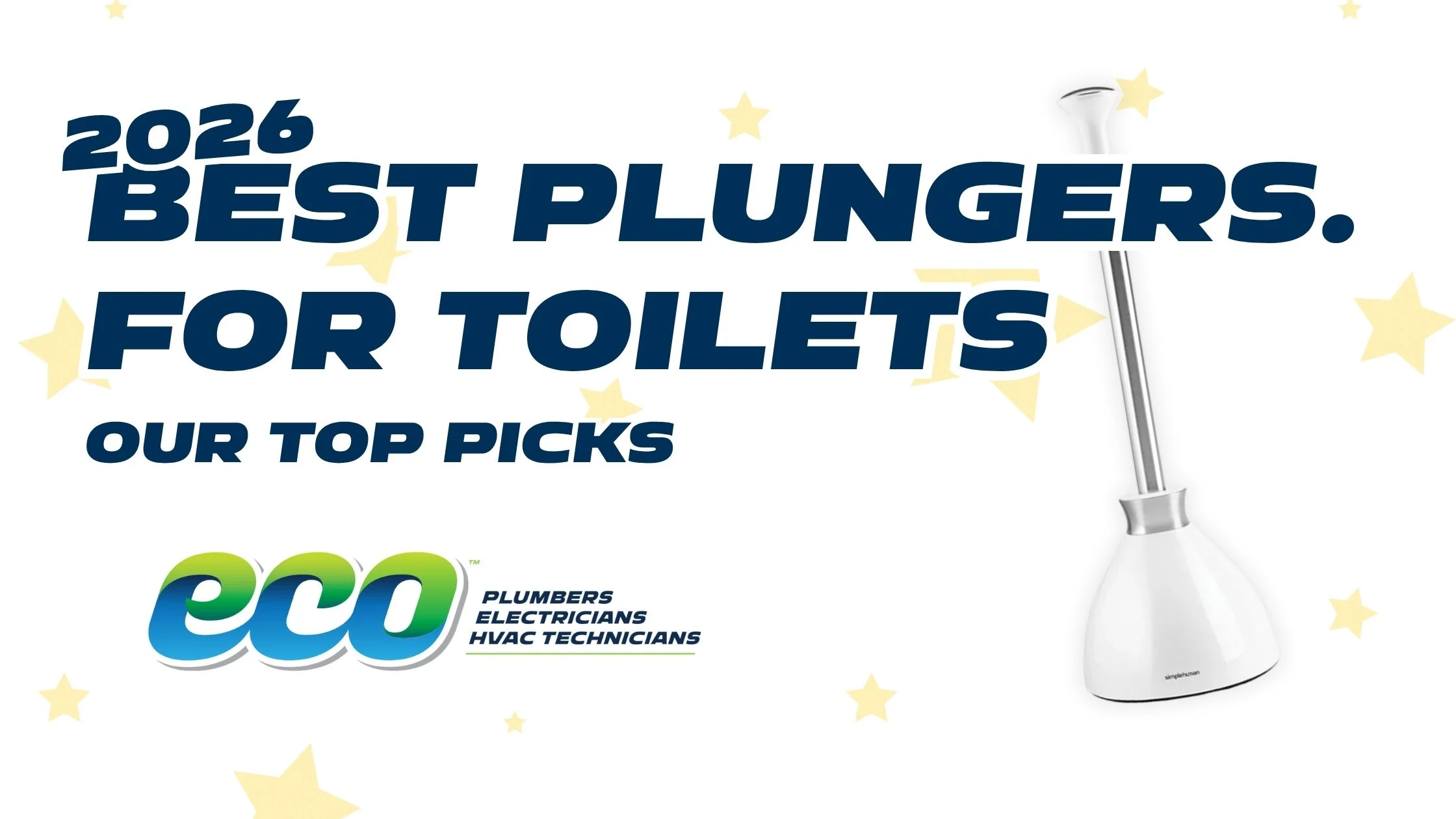
3. simplehuman Toilet Plunger and Caddy (Best Design-Forward Option)
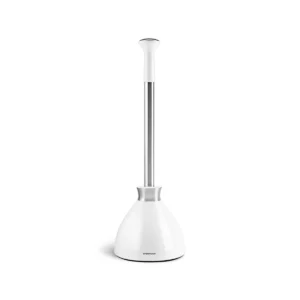
Best For: Homeowners who want a plunger that doesn’t look out of place in a newly renovated bathroom
Typical Cost: $35-$40+
The simplehuman Toilet Plunger and Caddy features a stainless steel rod and a narrow-profile flange built specifically for modern, low-flow toilets. A magnetic collar locks the cover to the rod, so you can carry the plunger and its caddy together without dripping across the floor.
If style matters just as much as function in your bathroom, the simplehuman is worth the higher price tag.
What Should You Look for When Buying a Toilet Plunger?
Beyond the flange, a few features separate a plunger that actually works from one that ends up back in the closet.
- Handle length. Toilet plungers should have a long handle, generally 18-24 inches, so you can apply leverage without bending over the bowl.
- Material. Solid rubber creates a better seal than thinner vinyl or plastic and holds up longer without cracking or losing its shape.
- Flange size. The flange should be large enough to fully cover your toilet’s drain opening. Too small and you lose suction; too large and it becomes awkward to use.
- Handle grip. A “T” or contoured handle gives you a more secure, two-handed grip for stubborn clogs.
- Storage. Look for a plunger that comes with, or fits into, a caddy or holder. Keeping it dry and contained between uses helps it last longer and keeps your bathroom sanitary.
How Do You Properly Use a Toilet Plunger?
The most common plunging mistake homeowners make is plunging too fast right from the start. Speed doesn’t move a clog. Pressure does.
- Make sure there’s enough water in the bowl to fully submerge the plunger cup. Add water if needed.
- Insert the flange into the drain opening at a slight angle to release trapped air, then straighten it once it’s seated.
- Push down slowly for the first plunge to force out air pockets, then plunge with firm, steady strokes.
- Keep the seal intact for 15-20 strokes before pulling the plunger away to check if the water drains.
- Repeat if needed, adding more water each time, until the bowl drains on its own.
When Should You Stop Plunging and Call a Plumber?
You should call a plumber if a clog doesn’t clear after several rounds of plunging, if water backs up into other drains when you flush, or if the same clog keeps returning within a few days. Those are all signs the blockage is further down the line than a plunger can reach.
A gurgling shower drain or bathtub when you flush the toilet often points to a clog in the main sewer line rather than the toilet itself. That’s not something a plunger, or even a store-bought drain snake, is built to handle safely. Pushing too hard with the wrong tool can scratch porcelain or damage older pipes.
If you’re dealing with a recurring or stubborn clog, Eco’s drain clearing services use camera inspections and professional-grade cabling or hydro-jetting to find and clear the real source of the problem, not just the symptom.
The Right Plunger Makes All the Difference
A flange plunger with a long handle and a solid rubber head is the best choice for clearing most toilet clogs. Knowing what to buy and how to use it properly can save you an unnecessary service call and a lot of frustration in the moment.
But not every clog is a job for a plunger. Recurring backups, gurgling drains, or a clog that won’t budge after repeated attempts usually point to a bigger issue in your plumbing system, not a tool problem.
If you’ve tried plunging and the problem keeps coming back, Eco’s drain cleaning team can pinpoint exactly what’s going on and clear it for good, or you can schedule a plumbing appointment directly if you’re ready for a technician to take a look. At Eco Plumbers, Electricians, and HVAC Technicians, we’ve helped homeowners across Ohio and Kentucky get their plumbing flowing again, whether that means a quick tip over the phone or a same-day service visit.
FAQs
Is it normal to need a plunger often, or does that mean something is wrong?
Occasional plunging is normal, especially in older homes. But if you're reaching for the plunger multiple times a week, it usually points to a partial blockage, low water pressure from the tank, or a toilet that isn't flushing at full strength, all of which are worth having a plumber look at.
What's the difference between a plunger and a toilet auger?
A plunger uses air and water pressure to push a clog through the pipe, while a toilet auger (also called a closet auger) is a flexible metal cable that physically breaks up or pulls out the blockage. Augers are typically the next step up when a plunger alone doesn't clear the clog.
How do you clean and store a plunger properly?
Rinse the plunger with hot water and flush the toilet a few times after use, then let it air dry fully before putting it away. Storing a damp plunger in a closed container can lead to mildew and odor, so a vented caddy or holder works better than a bucket or bag.
Is it safe to plunge a toilet that's already overflowing?
It's best to wait. Plunging while the bowl is actively overflowing can push water and waste further onto your bathroom floor. Let the water level settle first, and if it doesn't stop rising, shut off the water supply valve behind the toilet before you attempt to plunge.