

What's Ahead
You’ve called a plumber for a slow drain more times than you can count. Every visit, they run a snake through the line, the water flows again, and everything’s fine, until it isn’t. Six weeks later, the same sink is backing up, and now someone’s mentioning hydro jetting, at a price noticeably higher than what you paid last time.
Eco Plumbers, Electricians, and HVAC Technicians run hydro jetting jobs across Greater Columbus, Dayton, Cincinnati, and Southern Ohio every week, and the question homeowners ask before booking is almost always the same: is this actually worth the extra money, or is it an upsell dressed up as a solution?
Hydro jetting is worth it when a drain keeps clogging after snaking, when grease or roots have built up along the pipe walls, or when a main line is backing up sewage into your home. It costs more upfront than a standard cable snake, but it clears the entire diameter of the pipe rather than punching a hole through the clog, which is why it tends to prevent the same problem from coming back. It’s not worth it for a one-time minor clog, and it’s not an option at all if a camera inspection shows the pipe is too deteriorated to handle the pressure.
What Is Hydro Jetting?
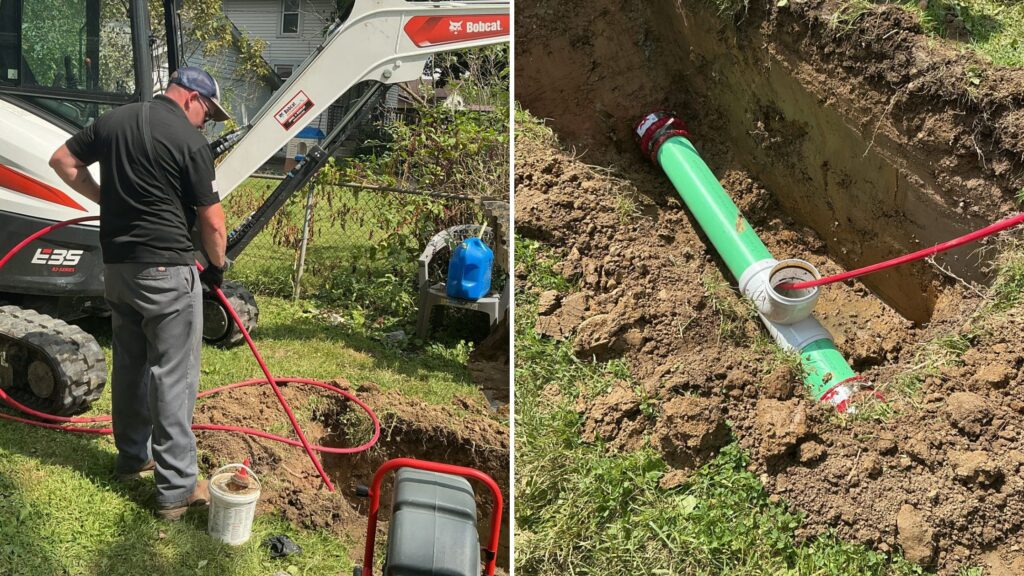
Hydro jetting uses a high-pressure water hose, typically running between 1,500 and 4,000 PSI, to scour the entire interior wall of a pipe, not just push through a blockage. A specialized nozzle feeds down the line and blasts water in every direction, stripping away grease, mineral scale, sludge, and root intrusion stuck to the pipe’s surface.
The National Association of Sewer Service Companies (NASSCO) confirms that pipe cleaning combines mechanical equipment and water pressure, and has published a Jetter Code of Practice covering the devices and nozzles used to clean pipes with high-pressure water.
Compare that to a garden hose, which runs at roughly 40 to 60 PSI, and it’s easy to see why jetting clears buildup that snaking simply can’t touch.
How Much Does Hydro Jetting Cost?
At Eco, pricing depends on the scope of the job. Downspout jetting typically runs $700 to $900, mini jetting for smaller interior drains runs $400 to $700, and sewer line jetting starts between $1,500 and $2,500 depending on length and condition. For comparison, a standard drain clearing visit runs $125 to $275 per drain, and main line cable clearing with a root-cutting head usually runs $350 to $650.
That gap is exactly what makes people hesitate; jetting can cost several times more than a standard snake or cable job, depending on the scope of work. But the pricing reflects two different outcomes: snaking opens a channel through the clog, while jetting removes the buildup from the entire pipe wall, on interior drains, downspouts, or the main sewer line itself.
When Hydro Jetting Is The Right Choice
Jetting earns its higher price tag when the problem is buildup or debris that standard clearing can’t fully remove. That shows up in a few specific situations:
- A drain that keeps clogging on the same schedule. If you’ve snaked the same line two or three times and it’s still backing up, the buildup along the pipe wall is what needs to go, not just another pass with a cable.
- Downspout lines clogged with roof grit and debris. Jetting clears the grit and sediment that collect in downspout drains far more effectively than snaking. It can also help with small root intrusion in these lines, though results there are inconsistent and it isn’t a reliable fix for larger root problems.
- Grease-heavy kitchen lines. Grease coats pipe walls and hardens over time. Snaking cuts through it; jetting strips it out.
- Plastic sewer lines with debris buildup. On PVC and other plastic sewer pipes, jetting clears out accumulated debris that’s restricting flow. This addresses an active clog.
Left alone, debris buildup in a sewer line doesn’t stay static; it keeps narrowing the pipe until it causes a full backup. The EPA estimates there are at least 23,000 to 75,000 sanitary sewer overflows per year in the U.S., not counting backups into individual homes. Clearing debris out before it reaches that point is exactly what jetting is for.
When Hydro Jetting Isn't the Right Choice
Jetting isn’t automatically the better option in every situation. If a single drain is slow for the first time, a standard drain clearing and cleaning service usually resolves it without the added cost of jetting.
Pipe condition matters just as much as the clog itself. Older cast iron, Orangeburg, or clay pipe with existing cracks can’t always handle jetting pressure safely, which is exactly why a camera inspection comes first. And if a plumber hasn’t run a camera down the line at all, jetting blind risks turning a small crack into a bigger break.
When to Choose Hydro Jetting over Standard Drain Clearing
Whether hydro jetting is the right choice comes down to one question: is the pipe dealing with buildup, or just a single blockage? Here’s how the two situations stack up side by side.
When Hydro Jetting Is Right | When Hydro Jetting Isn’t Right |
Recurring clogs, grease-heavy lines, root intrusion, multi-fixture backups | First-time or minor clog |
Removing buildup from the entire interior pipe wall | Opening a channel through the clog |
Structurally sound, confirmed by camera inspection first | Works even on older or more fragile pipe |
What Happens During a Hydro Jetting Appointment
A hydro jetting visit looks different from a typical drain call, and understanding what happens step by step makes the price difference easier to accept.
- Camera inspection during the initial visit. Before jetting is ever recommended, a sales technician typically runs a video inspection to see what’s sitting in the line and confirm the pipe can safely handle jetting pressure.
- Nozzle selection. Grease, debris, or root intrusion each call for a different nozzle, and the jetting technician chooses based on what that camera footage showed.
- Hose insertion through the cleanout. The jetting hose feeds into the line through an existing access point; no digging required.
- Pressurized cleaning pass. The nozzle works its way down the pipe, scouring the full interior wall rather than just punching a channel through.
- Follow-up camera check. The jetting technician runs the camera again to confirm the line’s condition after the pass.
- Results reported back. The jetting technician reports the post-jetting condition back to the sales technician, so you get a clear picture of what was cleared and what, if anything, still needs attention.
So, Is Hydro Jetting Worth It?
Hydro jetting is worth the money when the problem is buildup, not a one-off clog: recurring backups, grease-lined kitchen lines, root intrusion, or a main line affecting multiple fixtures in the house. For a first-time minor clog, standard drain clearing does the job at a lower cost.
If you’re dealing with a drain issue or clog that keeps coming back no matter how many times it’s been snaked, that pattern itself is the answer: the buildup is still there, and jetting is what actually removes it.
Before you book anything, it helps to see the process itself. Watch this video for a closer look at what a hydro jetting appointment actually involves, from the camera inspection to the final clearing pass.
Eco Plumbers, Electricians, and HVAC Technicians run a camera down the line before recommending hydro jetting services for exactly this reason: you shouldn’t have to guess whether the higher price tag is justified. If your drains keep clogging on repeat, schedule a video inspection and get a straight answer on what your pipes actually need.
FAQs
Do I need to be home during a hydro jetting appointment?
At Eco Plumbers, Electricians, and HVAC Technicians, you don't need to be present for the entire job, but a technician typically needs someone available at the start to walk through what the camera found before jetting begins. You'll also need to provide access to a cleanout, whether it's inside the home or in the yard.
Does homeowners insurance cover hydro jetting?
Usually not, as routine maintenance, since insurers generally treat it the same as any other preventive service. If jetting is needed to resolve damage from a sudden backup or covered event, coverage depends on your specific policy, so it's worth a quick call to your insurer before assuming either way.
Can hydro jetting clear a drain that's completely blocked, with no water flowing at all?
In most cases, yes. The nozzle can still be fed into the line and work back through a full blockage rather than needing existing flow to operate. In rare cases where the blockage is severe enough to prevent hose access entirely, a technician may need to open a path first before running full jetting pressure.
What should I do to prepare for a hydro jetting appointment?
Clear access to the cleanout, whether that's under a sink, in the basement, or in the yard, and mention any DIY chemical drain cleaners you've used recently, since those can react with the water pressure. Beyond that, there's little homeowner prep involved.
Is hydro jetting only for main sewer lines, or can it clean smaller drains too?
It works on both. Interior lines like kitchen and bathroom drains can be jetted too, just with a smaller nozzle and lower pressure calibrated to the pipe's diameter, rather than the higher pressure used on a main sewer line.