


What's Ahead
Every fall, homeowners pull the same tangled bins of string lights, inflatables, and extension cords out of the garage and plug them back in without a second thought. It feels routine, but it’s not risk-free. According to the Electrical Safety Foundation International (ESFI), an estimated 860 home fires are caused by holiday decorations every year, and a large share of those start with the exact strands and cords sitting in your Halloween and Christmas boxes right now.
At Eco Plumbers, Electricians, and HVAC Technicians, our licensed electricians get calls every October, November, and December for tripped breakers, warm outlets, and outdoor circuits that can’t keep up with holiday displays. We’ve traced enough of those problems back to their source to know exactly where things go wrong, and it’s rarely the lights themselves. It’s how they’re plugged in, connected, and left running.
In this guide, you’ll learn the seven electrical safety checks worth doing before you decorate for Halloween and again before you deck the halls for Christmas, so your display stays bright without putting your home at risk.
1. Inspect Every Strand and Cord Before You Plug It In
A light strand that worked fine when you put it away can become a hazard after a summer in a hot attic or a damp basement. Heat, moisture, and pests can crack insulation and loosen connections without any obvious outward sign.
Before hanging a single strand, run your hand along the full length of the cord and check for:
- Frayed, cracked, or exposed wiring
- Loose, broken, or missing bulb sockets
- Melted or discolored plugs
- A burning smell when the strand is plugged in briefly to test it
If a strand fails any of these checks, throw it out rather than patching it with electrical tape. A $10 replacement is a lot cheaper than a service call, or worse, a fire.
2. Match Your Lights and Cords to Where They're Going
Indoor and outdoor lighting products are rated differently for a reason, and mixing them up is one of the most common mistakes homeowners make with both Halloween props and Christmas displays. Indoor-only cords lack the thicker insulation and weatherproofing needed to handle rain, snow, and temperature swings.
Always confirm the tag on the box: light strands and extension cords used outside should be explicitly labeled for outdoor use. This matters just as much for a plugged-in Halloween skeleton or fog machine on your porch in October as it does for the icicle lights on your roofline in December.
3. Don't Overload a Single Outlet or Extension Cord
It’s tempting to connect strand after strand to cover more of the yard, but every string of lights and every extension cord has a maximum safe load. Exceeding it causes the cord to heat up, sometimes enough to melt the insulation or ignite nearby material like dry leaves, mulch, or a synthetic spiderweb.
Check the manufacturer’s tag for the maximum number of strands that can be safely connected end-to-end, and never guess. If you need to power multiple displays, use a heavy-duty, outdoor-rated power strip or timer with built-in overload protection instead of stacking cords together.
4. Plug Outdoor Displays Into GFCI-Protected Outlets
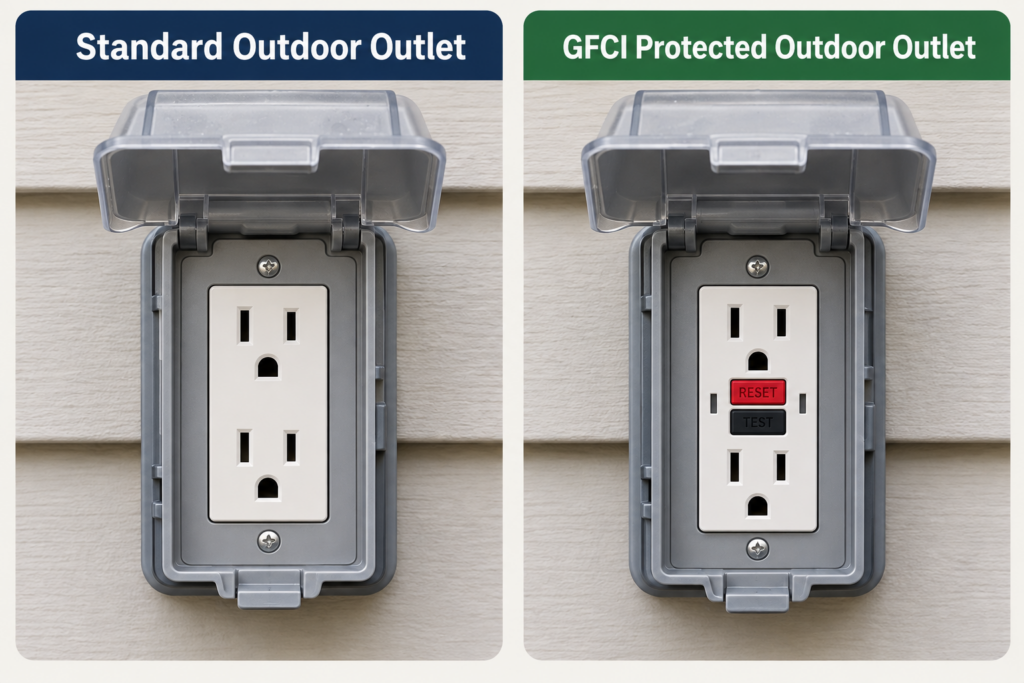
Ground-fault circuit interrupters (GFCIs) cut power the instant they detect a short or ground fault, which is exactly the kind of fault outdoor lighting is prone to once cords touch damp grass, snow, or standing water. Most homes built or updated in the last couple of decades have GFCI outlets on exterior walls, but plenty of older homes still don’t.
If you’re not sure whether your exterior outlets are GFCI-protected, that’s worth checking before you run a single cord outside this year. Eco’s electricians install GFCI and surge protection on exterior circuits so your outdoor outlets can handle everything from Halloween props to a full Christmas light display without nuisance trips or hidden shock hazards.
5. Keep Cords Off the Ground and Away From Water
Cords left lying in wet grass, snow, or puddles are more likely to develop the kind of hidden damage that leads to shorts. Elevate cords off the ground wherever you can, and use rubber cord covers anywhere a cord has to cross a walkway so it isn’t pinched underfoot or run over by a car.
This is also where a lot of Halloween-specific accidents happen. Extension cords for animatronics, fog machines, and inflatable props tend to snake across driveways and front walks where trick-or-treaters are walking in the dark. Keep those runs as short and as tucked away as possible.
6. Use Timers and Unplug Displays When You're Not Home
Leaving lights on overnight or while you’re away adds hours of unnecessary run time to cords and connections that are already working harder than they were designed for. Plug-in or smart timers let you enjoy your display every evening without leaving anything energized around the clock, and they have the added benefit of saving on your electric bill.
7. Give Your Lights Room to Breathe
Bulbs, even LED ones, generate some heat. Never wrap lights so tightly around a real or artificial tree, pack them into a plastic bin while still warm, or layer strand after strand on a synthetic Halloween decoration that heat has nowhere to escape. When hanging lights along your roofline or gutters, use insulated clips made for that purpose rather than nails or staples, which can pierce the wire’s insulation without you noticing.
Keep the Lights On, Not the Risk
A little prep is all it takes to turn holiday decorating from a hazard into a tradition you actually look forward to. Inspecting your strands, matching cords to the job, respecting load limits, and plugging into GFCI-protected outlets are simple habits that let you enjoy your Halloween and Christmas displays without the worry.
The strands you hang this year are only as safe as the outlets and circuits behind them.
If checking your outlets left you unsure whether your home’s exterior circuits are up to the task, that’s worth a closer look before the first strand goes up. For more on why the outlets themselves matter as much as the lights you plug into them, read our breakdown of why proper outlet installation matters for your home’s electrical system.
And if you’re trusting someone with your home’s wiring for the first time this season, you deserve to know exactly what that experience looks like. Read Eco Electrical Reviews: What to Expect Before Hiring Us to see how our electricians handle every job, from the first phone call to the final walkthrough, before you decide who gets the keys to your circuit breaker this holiday season.
FAQs
What's the actual difference between a GFCI outlet and a standard outlet?
A standard outlet just delivers power. A GFCI outlet constantly monitors the current flowing through it and shuts off automatically the instant it senses an imbalance, like current leaking into water or a person. That's why exterior circuits are required to have them, while most interior outlets aren't.
Are LED string lights actually safer than older incandescent lights?
Generally, yes. LED bulbs run much cooler than incandescent ones, which means less heat building up against a tree, a costume, or a bin of stored decorations. They also draw far less power, so you can typically connect more strands together before hitting a cord's rated capacity.
How do I know if my home's electrical panel can handle a bigger holiday display?
It depends on how much spare capacity your panel has and how many other circuits are already in use. If you've noticed flickering lights or tripped breakers in past years even with correctly rated cords, that's a sign worth having an electrician look at rather than something to work around with more extension cords.
Is it worth having an electrician add a permanent outdoor outlet instead of running cords out a window every year?
For homeowners who put up the same display every season, a dedicated exterior outlet is often more convenient and safer than running cords through a door or window each time. It also puts the outlet exactly where the display needs it instead of wherever the nearest indoor plug happens to be.
Should I hire an electrician for elaborate permanent holiday lighting, like roofline installs that stay up year-round?
Permanent lighting systems run current through your home's exterior continuously, not just for a few weeks a year, so the wiring and connections need to hold up to long-term outdoor exposure. Many homeowners have an electrician handle the initial wiring and outlet placement, then manage the lights themselves after that.