

When your plumbing backs up, choosing the correct mechanical intervention dictates whether your pipes get cleared or permanently destroyed. Gravity-fed plumbing networks rely entirely on a clear internal diameter to move wastewater away from your foundation. Snaking punches a physical hole through solid obstructions to restore immediate flow, while hydro jetting uses extreme water pressure to strip the internal walls bare. Applying the wrong tool to a degraded pipe causes immediate structural collapse and forces a massive excavation project. You need hard data and internal camera inspections to select the proper machinery. Getting the right drain cleaning methods explained Chillicothe properties require stops you from wasting capital on ineffective procedures. At Eco Plumbers, Electricians, and HVAC Technicians, we treat plumbing blockages as strict engineering failures. We inspect the line, identify the exact physical obstruction, and deploy the precise machinery needed to restore total flow. Let us evaluate the mechanical differences between mechanical augers and high-velocity water jets so you can protect your infrastructure.
1. What Is Mechanical Snaking And When Is It The Right Choice?
Mechanical snaking utilizes a motorized steel cable equipped with a specialized cutting head to physically bore through solid clogs. It serves as the primary tool for extracting dense, localized blockages like tangled hair, heavy paper products, and foreign objects dropped down the toilet. As the steel cable feeds into the line, the motor rotates the cutting head, shredding the obstruction and allowing wastewater to drain. Technicians swap out different cutting attachments, such as spade blades or C-cutters, depending on the density of the blockage. This method excels at removing solid mass rapidly without putting immense outward pressure on the pipe walls. We deploy the mechanical auger when camera inspections reveal older, fragile cast iron lines that cannot withstand high velocity water. While highly effective at clearing immediate physical blockages, snaking only punches a hole the exact width of the cutting head. It does not scrape away the sticky grease or soap scum coating the interior pipe walls, meaning soft blockages will eventually reform.
2. How Does Hydro Jetting Restore Pipes to Factory Condition?
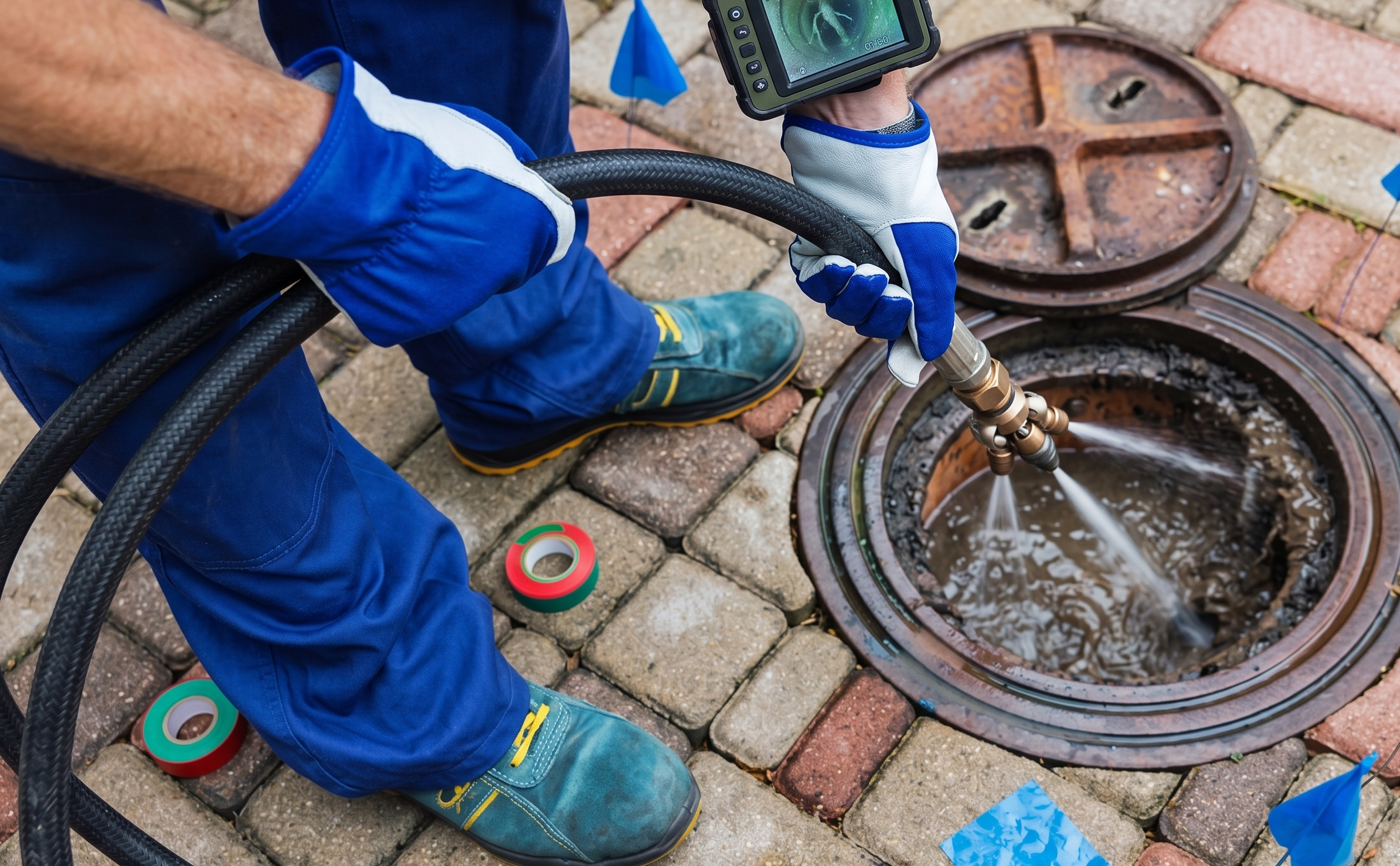
Hydro jetting blasts a highly pressurized stream of water at up to four thousand pounds per square inch to completely scour the interior of your plumbing lines. Unlike a steel auger that only bores a central hole, a jetting nozzle features reverse-facing jets that pull the heavy hose through the line while simultaneously washing the entire internal circumference of the pipe. This extreme kinetic force slices through dense tree roots, obliterates hardened grease banks, and strips away decades of mineral scale. The result is a pipe completely restored to its original factory diameter. This heavy duty machinery is strictly reserved for structurally sound PVC, copper, and verified clay pipes. Pumping water at four thousand pounds per square inch into a compromised, cracked, or heavily corroded line will cause the metal or clay to shatter, resulting in catastrophic underground flooding.
3. Which Technique Offers the Most Long-Term Structural Protection?
High pressure water jetting provides vastly superior long term protection because it removes the sticky residue that causes future clogs to form in the first place. When an auger punches through a grease clog, the surrounding grease remains glued to the pipe walls, ready to catch the next piece of debris that washes down the line. Water jetting strips that grease away entirely. Removing the baseline sludge drastically extends the time between required service calls. Understanding the true benefits of professional drain cleaning services requires looking at the lifespan of the pipe itself. A clean pipe operates with zero internal friction, allowing wastewater to flow rapidly by gravity alone. By stripping away corrosive sludge and mineral scale, you physically halt the internal deterioration of the plumbing grid and stop the formation of corrosive hydrogen sulfide gases caused by rotting organic matter.
4. What Are the Structural Risks of Choosing the Wrong Clearing Tool?
Applying the wrong mechanical force to a subterranean pipe causes immediate and irreversible destruction. Plumbers must match the clearing tool to the exact material composition and structural health of the line. Operating blindly leads to shattered pipes, separated joints, and raw sewage flooding your basement.
| Clearing Method | Target Obstruction | Structural Risk Profile | Best Pipe Application |
| Mechanical Snaking | Toilet paper, hair, solid objects | Very low risk of pipe rupture | Fragile cast iron, galvanized steel |
| Hydro Jetting | Heavy grease, sludge, tree roots | High risk if pipes are heavily corroded | Strong PVC, solid clay, copper lines |
| Chemical Liquids | None (Avoid completely) | Melts plastic, severely corrodes metal | Never recommended under any condition |
This operational matrix dictates our exact mechanical response. We never deploy extreme water pressure without first mapping the interior of the line with a high definition fiber optic camera. If the camera reveals deep structural cracks, bellies, or severe corrosion, we default to the mechanical auger to prevent blowing the pipe apart.
5. How Do I Determine the Right Maintenance Schedule for My Plumbing?
Determining exactly how often to schedule drain cleaning depends entirely on your daily wastewater volume and the age of your infrastructure. A standard residential property with modernized PVC piping typically requires a preventative high pressure scouring once every two to three years. However, older homes with mature trees planted near the sewer lateral face constant biological attacks from root intrusion, demanding strict annual hydro jetting to keep the lines open. Commercial kitchens and large households generating high volumes of grease require technical service every six months. We run digital cameras through your lateral lines to establish a baseline condition of your plumbing grid. Based on the thickness of the sludge and the presence of invading roots, we calculate a precise maintenance interval that prevents backups before they happen. Proactive scheduling stops emergency floods and keeps your infrastructure completely functional year round.
When your plumbing grid backs up, you must apply the correct mechanical intervention based on hard physical evidence. Snaking is the perfect tool for boring through solid, localized blockages inside older, fragile pipes. Hydro jetting delivers the extreme kinetic force required to strip away grease, mineral scale, and heavy tree roots from structurally sound lines. Guessing which tool to use puts your entire property at risk of a subterranean pipe collapse. At Eco Plumbers, Electricians, and HVAC Technicians, we use digital cameras to inspect your lines and deploy the exact machinery needed to restore total flow. Protect your pipes and stop backups permanently by scheduling a technical inspection with our team today.
“Stop plumbing backups before they cause structural damage. Call Eco Plumbers, Electricians, and HVAC Technicians at 740-722-7941 to book your digital pipe inspection today.”
FAQs
1. Why do older pipes in Chillicothe, OH, clog more frequently during winter?
Older pipes in Chillicothe, OH, clog frequently in winter because freezing ground temperatures cause the hot grease and fat poured down the sink to rapidly harden into solid blocks inside the lines.
2. Can tree roots penetrate solid sewer lines in Chillicothe, Ohio?
Yes, tree roots in Chillicothe, Ohio, easily penetrate the microscopic joints of older clay and concrete sewer lines in search of water, causing massive underground biological blockages.
3. Is it safe to use pressurized water on old cast iron pipes in a Chillicothe, OH, home?
It is highly unsafe to use extreme pressurized water on old cast iron pipes in a Chillicothe, OH, home because the intense kinetic force easily shatters the brittle, corroded metal walls.