


What's Ahead
It’s easy to forget the garden hose is still hooked to the spigot once the mums come out and the leaves start turning. You’re not alone, and it’s one of the most common (and most expensive) oversights homeowners make heading into an Ohio winter.
At Eco Plumbers, Electricians, and HVAC Technicians, our plumbers get calls every first cold snap of the year from Ohio and Kentucky homeowners who assumed a hose was just a hose, only to find out it had quietly set them up for a cracked pipe inside their wall. Here’s exactly what happens when you leave a hose connected through freezing temperatures, why it matters more than it seems, and what to do about it before or after the fact.
Why a Connected Hose Causes Trouble in Freezing Temperatures
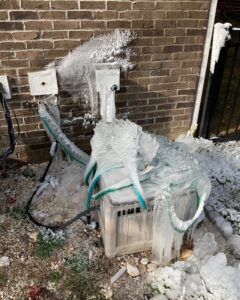
A hose left attached to an outdoor spigot traps water in the line that runs from your spigot back into your home, and that trapped water is what actually causes the damage.
Under normal conditions, when you shut off an outdoor faucet, any leftover water in the hose bib and the pipe just behind it can drain out through the spigot. But when a hose is still connected, it blocks that drainage path, so water has nowhere to go except to sit right at the point where your home’s plumbing meets the cold outside air.
That section of pipe, called a hose bib or sillcock, is often one of the least insulated points in your entire plumbing system. It’s tucked in an exterior wall, sometimes in an unheated garage or crawl space, with only a thin layer of wood, brick, or siding between it and the outdoors. A connected hose turns a minor design vulnerability into a serious risk.
What Actually Happens Inside Your Pipes When Water Freezes
Water expands by about 9% as it freezes, and that expansion can generate pressure well beyond what a copper pipe is built to withstand. According to the Journal of Light Construction, a trade publication for building professionals, freezing water can produce pressure high enough to rupture standard copper pipe, which is why even solidly built plumbing isn’t immune once ice starts to form inside it.
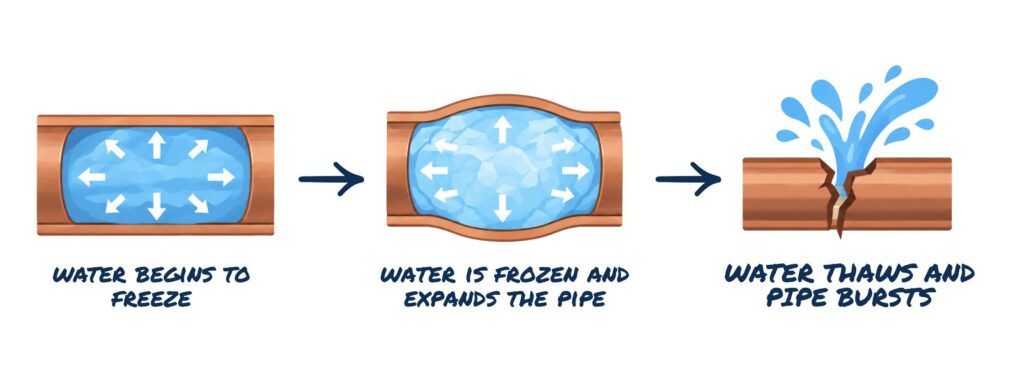
The crack usually doesn’t happen at the frozen section itself. Ice typically forms first near the spigot, plugging the pipe like a cork. As the water behind that plug continues to freeze and expand, pressure builds up further down the line, often at a joint or fitting inside your wall, and that’s where the pipe actually splits. You might not notice anything is wrong until temperatures rise, the ice thaws, and water starts pouring out of a pipe that’s nowhere near your outdoor faucet.
The Warning Signs of a Frozen or Cracked Hose Bib
A few signs are worth checking for anytime you’ve had a hard freeze and suspect a hose was left connected:
- No water flow, or only a trickle, when you turn on the outdoor spigot
- Bulging, frosted, or ice-coated pipe visible where the hose bib enters the house
- A damp or musty smell near the interior wall behind the spigot, which can mean water is already leaking inside the wall cavity
- Unexplained drops in water pressure at nearby indoor fixtures, since a split pipe upstream can affect flow throughout that line
- Higher than normal water usage on your next bill, even if you haven’t seen or heard anything unusual
If you notice any of these, shut off the water supply to that line if you can locate the shutoff valve, and call a licensed plumber before running water through the pipe again.
What a Burst Outdoor Pipe Can Cost You
This is where “I forgot to disconnect the hose” turns into a genuinely expensive mistake. A cracked pipe from freeze damage frequently isn’t discovered until it thaws and starts leaking, often inside a finished wall, which means the repair bill covers more than just the pipe itself. Homeowners are regularly looking at costs for drywall repair, insulation replacement, flooring damage, and mold remediation on top of the plumbing fix. The average household claim for water damage and freezing runs around $12,500, according to insurance industry data compiled by ConsumerAffairs, and hose bibs are one of the most common points of failure behind those claims.
The good news is that this entire scenario is almost always preventable, and it takes far less time to disconnect a hose than it does to repair a burst pipe and the wall around it.
6 Steps to Disconnect and Winterize Your Hose the Right Way
Before your first hard freeze of the season, typically once nighttime temperatures start dropping toward 32°F in Ohio and Kentucky, walk through these steps:
- Disconnect every hose from every outdoor spigot. Don’t just shut off the nozzle. The hose itself needs to come off the faucet entirely.
- Drain the hose completely and coil it up for storage in a garage, shed, or basement rather than leaving it outside.
- Shut off the interior valve that supplies your outdoor spigot, if your home has one. Many homes built in the last few decades have a dedicated shutoff for exactly this purpose.
- Open the outdoor spigot after shutting off the interior valve so any remaining water in the line can drain out instead of sitting and freezing.
- Install an insulated faucet cover over the spigot for an added layer of protection, especially useful for older homes without an interior shutoff valve.
- Check for drafts or gaps around where the pipe enters your home’s exterior wall, and seal them with caulk if needed.
What to Do If You Already Forgot to Disconnect Your Hose
If you’re reading this because you just noticed the hose is still connected and a freeze is coming tonight, don’t panic. Go through the disconnect and drain steps above right now, even after the fact. If temperatures have already dropped and you’re seeing warning signs like reduced water flow, don’t try to thaw the pipe yourself with an open flame or by cranking up water pressure, since that can turn a frozen pipe into a burst one in seconds. A licensed plumber can safely locate and thaw the affected section, inspect for hidden cracks before you run water through it again, and catch a small problem before it becomes a wall full of water damage.
Protecting Your Home This Winter
Leaving a hose connected to your spigot is a small oversight with an expensive cost, but it’s an easy one to fix once you know what to look for. Disconnect your hoses, drain the line, and give your hose bibs a few minutes of attention now, because that’s a lot cheaper than the thousands of dollars and weeks it can take to undo a burst pipe.
If you’re wondering what you’re looking at if a hose bib does crack, our guide to “How Much Does It Cost to Repair a Frozen Outdoor Faucet?” breaks down what that repair typically runs.
FAQs
Do frost-proof spigots still need a hose disconnected in winter?
Yes. A frost-proof (or freeze-proof) sillcock is designed to keep the shutoff valve further inside the heated part of your home, but it only works properly if the water can fully drain out, and a connected hose blocks that drainage just like it would on a standard spigot.
What's the difference between a hose bib and a sillcock?
The terms are often used interchangeably, but a sillcock technically refers to an outdoor faucet with a long stem that extends into the wall, positioning the actual shutoff valve well inside the heated part of your home. A standard hose bib usually sits closer to the exterior wall, which is part of why some are more freeze-prone than others.
Do sprinkler or irrigation lines need to be winterized the same way as a hose bib?
Not exactly. Irrigation systems typically need to be fully blown out with compressed air to clear every line, since they hold far more water across a larger network of pipe than a single hose bib. It's a different process, and most homeowners have it done by an irrigation specialist each fall.
Is it safe to leave a trickle of water running from an outdoor spigot during a cold snap?
A slow trickle can sometimes help prevent freezing in an indoor pipe near an exterior wall, but it isn't a reliable fix for an outdoor hose bib specifically, and it won't help at all if a hose is still attached and blocking drainage. Disconnecting the hose and draining the line is still the more dependable step.
How much does it typically cost to repair or replace a hose bib?
Costs vary depending on whether the valve just needs a simple repair or the whole fixture and any damaged interior pipe need to be replaced. If you're dealing with a frozen or cracked hose bib, it's worth having a plumber take a look so you get an accurate diagnosis before assuming the worst.
Will homeowners insurance cover a burst pipe from a connected hose?
Many homeowners policies cover sudden and accidental water damage from a burst pipe, but coverage can vary depending on your policy and whether the damage is considered preventable neglect. It's worth reviewing your policy or calling your insurance agent directly if you're dealing with a burst pipe.